

Hoạt động

On June 11th, 2026, in Dong Hoi, Quang Tri Province, the Closing Workshop of the Inclusion 1 Project was held with the participation of representatives from the Ministry of National Defense, the U.S. Embassy in Vietnam, central and local government agencies, partner organizations, persons with disabilities, and beneficiary families. At the workshop, the Action to the Community Development Institute (ACDC) was honored to receive a Certificate of Merit from the Chairman of the Quang Tri Provincial People’s Committee in recognition of its contributions to supporting persons with disabilities in the province.
The workshop provided an opportunity for stakeholders to reflect on more than five years of implementing the Inclusion 1 Project in Quang Tri, Hue, and Da Nang, share achievements and lessons, and discuss directions for sustaining effective models after the project’s completion.
According to the final project report, the Inclusion 1 Project supported 18,272 persons with disabilities, children with disabilities, and family members in accessing appropriate services and support activities. Among them, 10,502 persons with disabilities received rehabilitation services; 9,653 received care services; 11,351 family members and caregivers participated in capacity-building activities; 5,008 persons with disabilities engaged in networks, organizations, and community activities. The project also trained 904 rehabilitation professionals, supported 27 rehabilitation facilities in adopting multidisciplinary approaches, and strengthened the capacity of 18 organizations providing disability-related services and program management.
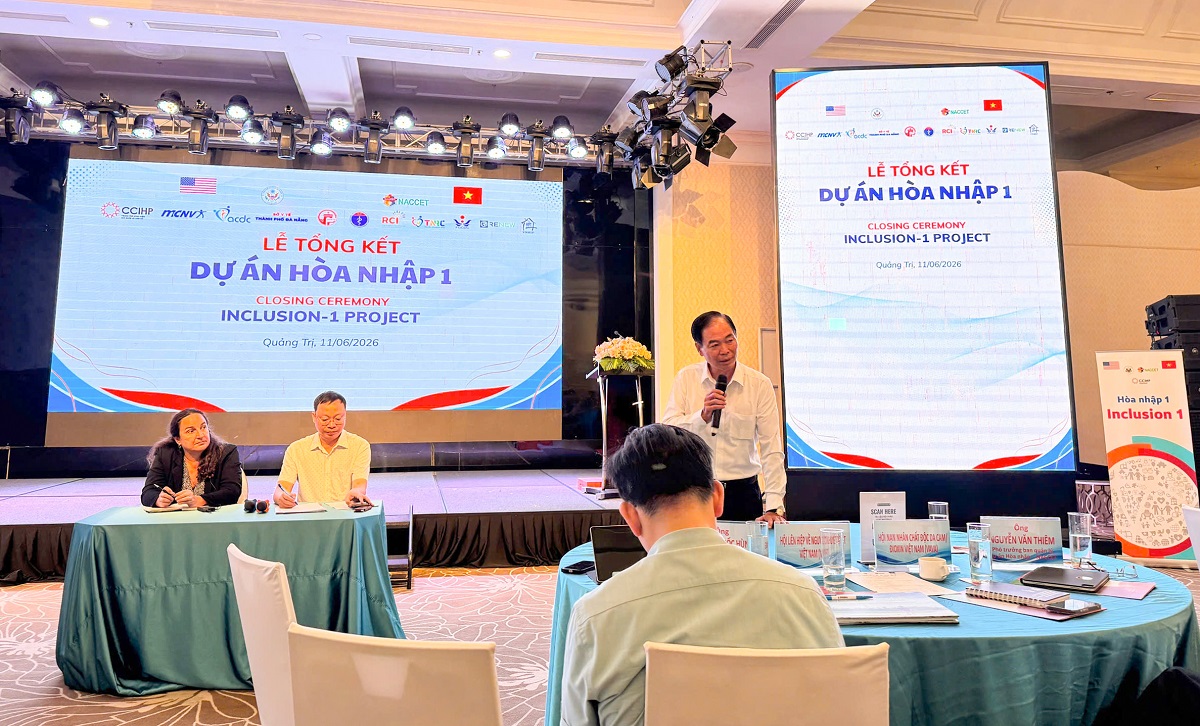
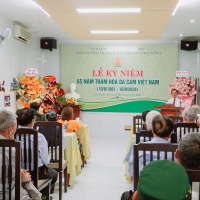
Mr. Dang Van Thanh, Vice President of the Vietnam Federation on Disability (VFD), delivers remarks at the Closing Workshop of the Inclusion 1 Project, highly appreciating the project’s implementation results, sharing lessons learned, and emphasizing the replication of support models for persons with disabilities
The final evaluation revealed that 89.5% of beneficiaries reported improvements in their quality of life following project interventions. Beyond quantitative indicators, the project contributed to expanding access to services, enhancing the participation of persons with disabilities in social life, and fostering positive changes in public awareness and attitudes.
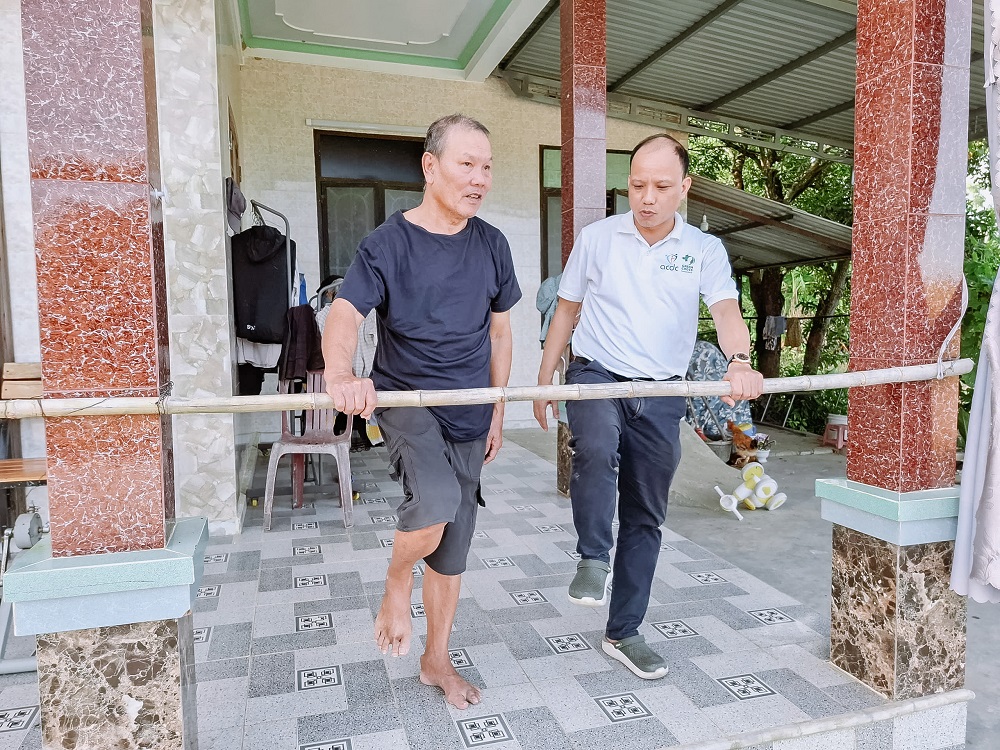
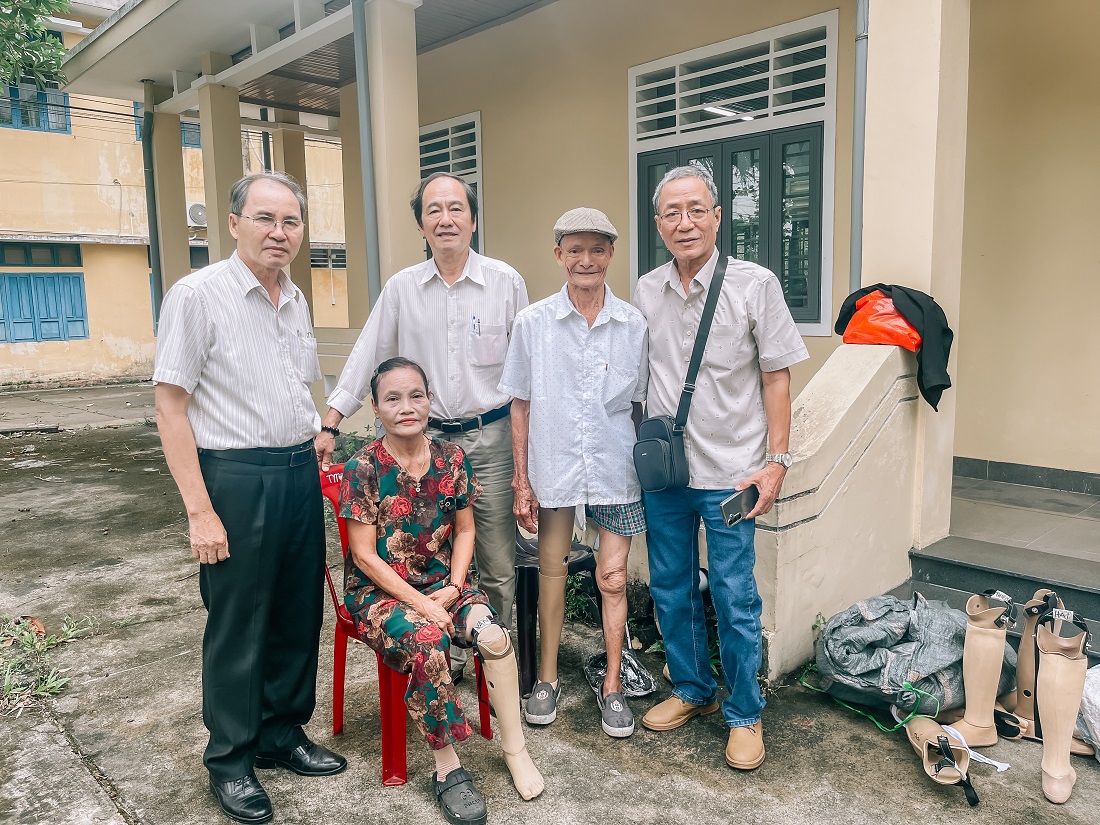
As one of the implementing partners of the Inclusion 1 Project, ACDC worked closely with persons with disabilities, their families, and local partners to develop comprehensive support models, including community-based rehabilitation, home-based care, livelihood assistance, provision of assistive devices, and the promotion of persons with disabilities’ participation in self-help groups, clubs, and community activities. These models not only improved living conditions but also created opportunities for persons with disabilities to develop their capacities, build confidence, and engage more actively in society.
One of the workshop’s highlights was the panel discussion titled “Quality of Life of Persons with Disabilities: Stories of the present and future,” moderated by Ms. Nguyen Thi Lan Anh, Director of ACDC. Through firsthand accounts from beneficiaries and their families, the session provided vivid insights into the positive impact of the project on the lives of persons with disabilities.

The panel discussion “Quality of Life of Persons with Disabilities: Stories of the Present and Future” is moderated by Ms. Nguyen Thi Lan Anh, Director of ACDC. The session highlights positive changes after more than five years of project implementation, ranging from rehabilitation, home-based care, and livelihood support to strengthening the participation of persons with disabilities in the community
Ms. Ha Thi Tuyet, once a woman with a disability who struggled with self-confidence and rarely participated in social activities, has become the Head of the Sunflower Women with disabilities Club and now actively supports other women with disabilities in her community. Ms. Nguyen Thi Thuy, a person with a disability from Trung Giang Commune, experienced significant improvements in mobility and health management after accessing rehabilitation services. Ms. Ho Thi Tam, an ethnic Bru–Van Kieu woman from Huong Phung Commune, gained greater mobility, confidence, and opportunities to participate in social activities through rehabilitation services and assistive devices. Meanwhile, Ms. Dang Thi Hoai Nhi, the mother of a child with autism spectrum disorder, shared that the knowledge, skills, and support provided by the project helped her become more confident and resilient in supporting her child’s development.
Speaking at the workshop, Ms. Nguyen Thi Lan Anh emphasized that ACDC is particularly proud of demonstrating the effectiveness of a comprehensive support approach for persons with disabilities. According to her, when rehabilitation services, home-based care, livelihood support, and independent living initiatives are integrated into a coordinated system, persons with disabilities can achieve more sustainable and holistic improvements in their lives. She expressed hope that this effective intervention model will continue to be maintained and expanded in the future.
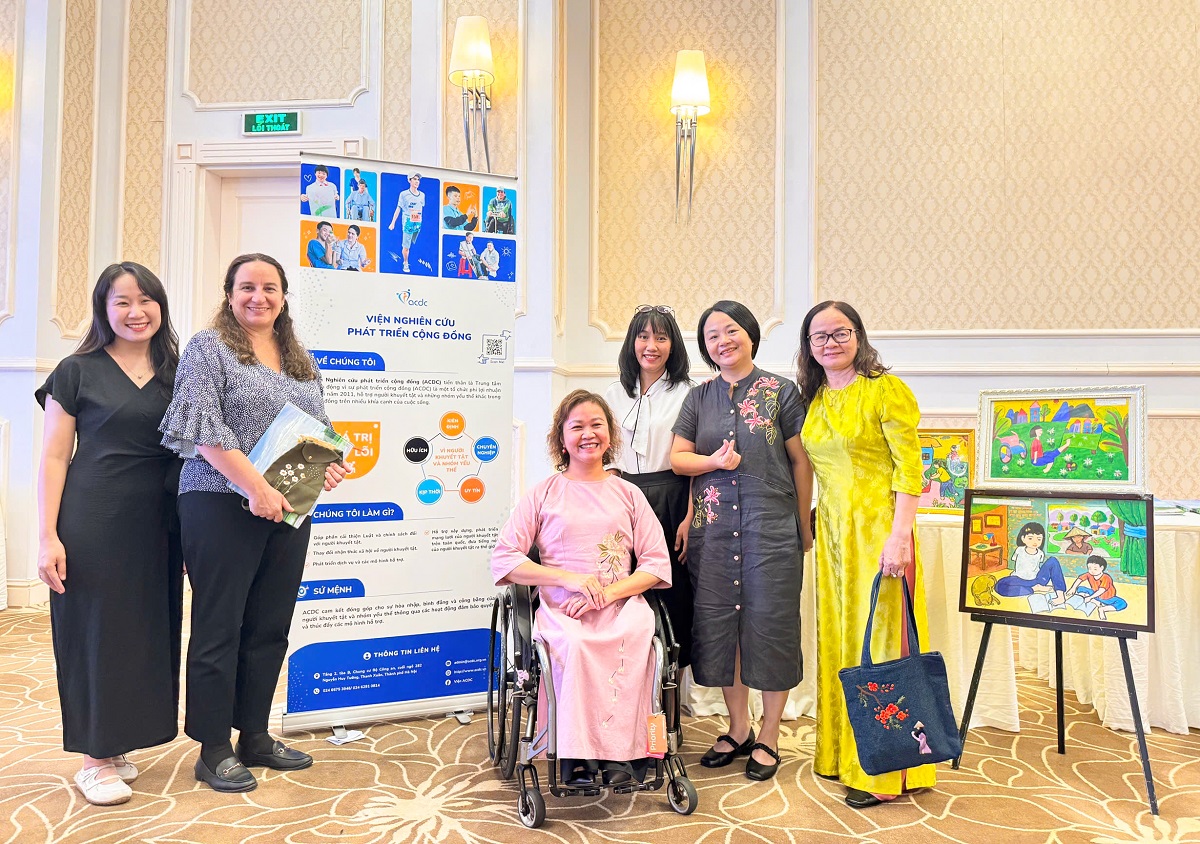
Representatives of the U.S. Embassy take a commemorative photo with ACDC’s leadership and project coordination team at the information exhibition area within the Closing Workshop of the Inclusion 1 Project. The exhibition area showcases ACDC’s activities, core values, and mission in promoting the rights, participation, and quality of life of persons with disabilities, while also sharing creative products and positive stories from the community
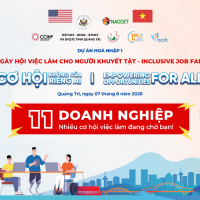
Ms. Lan Anh also highlighted another significant achievement of the project: positive changes in public perceptions of disability. Through communication and engagement initiatives such as the “Run with Persons with Disabilities – No Distance, No Limits” event and the “Opportunities for Everyone” Job Fair, increasing opportunities have been created for persons with disabilities to participate on an equal basis in economic, cultural, and social life.
Despite these achievements, Ms. Lan Anh noted that the project’s implementation period remained relatively short compared to the long-term needs of persons with disabilities and their families. Many successful models and services have demonstrated their effectiveness but have not yet had sufficient time to be institutionalized into sustainable policies and funding mechanisms at local and national levels. Nevertheless, she expressed confidence that the results achieved over the past five years will continue to be built upon and serve as a foundation for future disability inclusion initiatives.
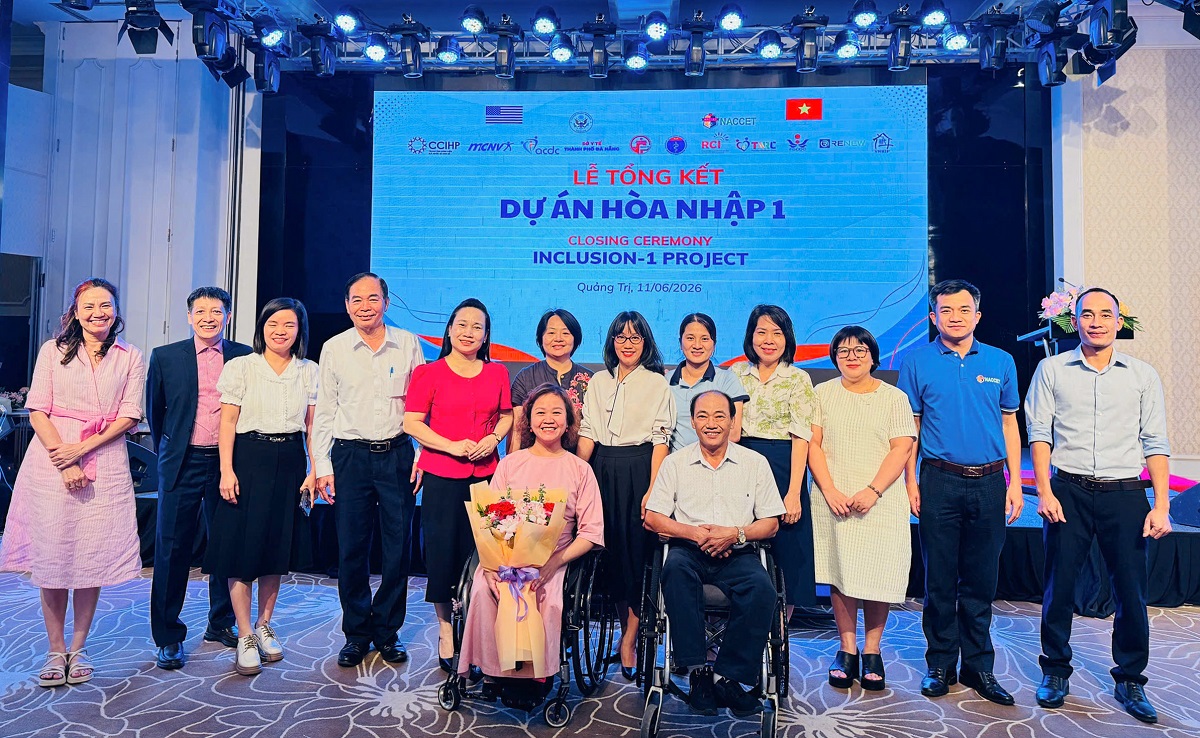
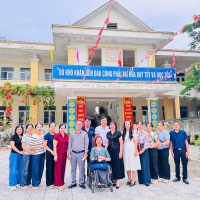
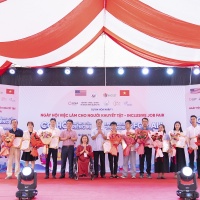
Representatives of ACDC, partner organizations, and delegates take a commemorative photo at the Closing Workshop of the Inclusion 1 Project
As part of the workshop, participants also reflected on the collaborative journey among donors, government agencies, implementing organizations, local healthcare systems, disability groups, and beneficiaries themselves. This close cooperation played a critical role in the project’s success and generated valuable lessons for future disability support programs.
After more than five years of implementation, the Inclusion 1 Project leaves behind not only impressive statistics and effective intervention models but also meaningful and lasting improvements in the lives of thousands of persons with disabilities and their families. These achievements will continue to serve as an important foundation for governments, organizations, and communities to work together toward a more inclusive, equitable, and barrier-free society for all.
Translator: Nguyen Dac Thanh