

Hoạt động

As part of the livelihood support activities for persons with disabilities, Action to the Community Development Institute (ACDC) continues to coordinate with the Department of Health of Hue City and representatives of the local Department of Culture of Societyconducted the “Mid-term monitoring of livelihood support activities for 15 households of persons with disabilities in four communes and wards of Hue City including: Phu Bai, Phu Ho, Thanh Thuy and Phong Dinh on January 8-9, 2026.
Since October 2025, the project has implemented and completed consulting activities to adjust infrastructure for production and business, including chicken farms, small grocery stores, refreshments, breakfast facilities, and sewing and processing facilities. At the same time, the procurement and handover of supplies, machines, equipment, and initial stock aim to support households with persons with disabilities to implement livelihood activities suitable for actual conditions through livelihood activity groups such as: Chicken-raising livelihood development activities; Small-scale grocery, beverage, and breakfast food businesses and home-based garment subcontracting activities.
Alongside with the provision of production inputs, the project organized technical guidance and support sessions directly at households, including: technical guidance on biosafety-oriented chicken farming combined with field trips; guidance on household-scale financial management; adjustment and arrangement of goods for small grocery stores. These activities not only helped improve the knowledge and skills of persons with disabilities but also promoted the active participation of persons with disabilities and members of their households in the livelihood development process.
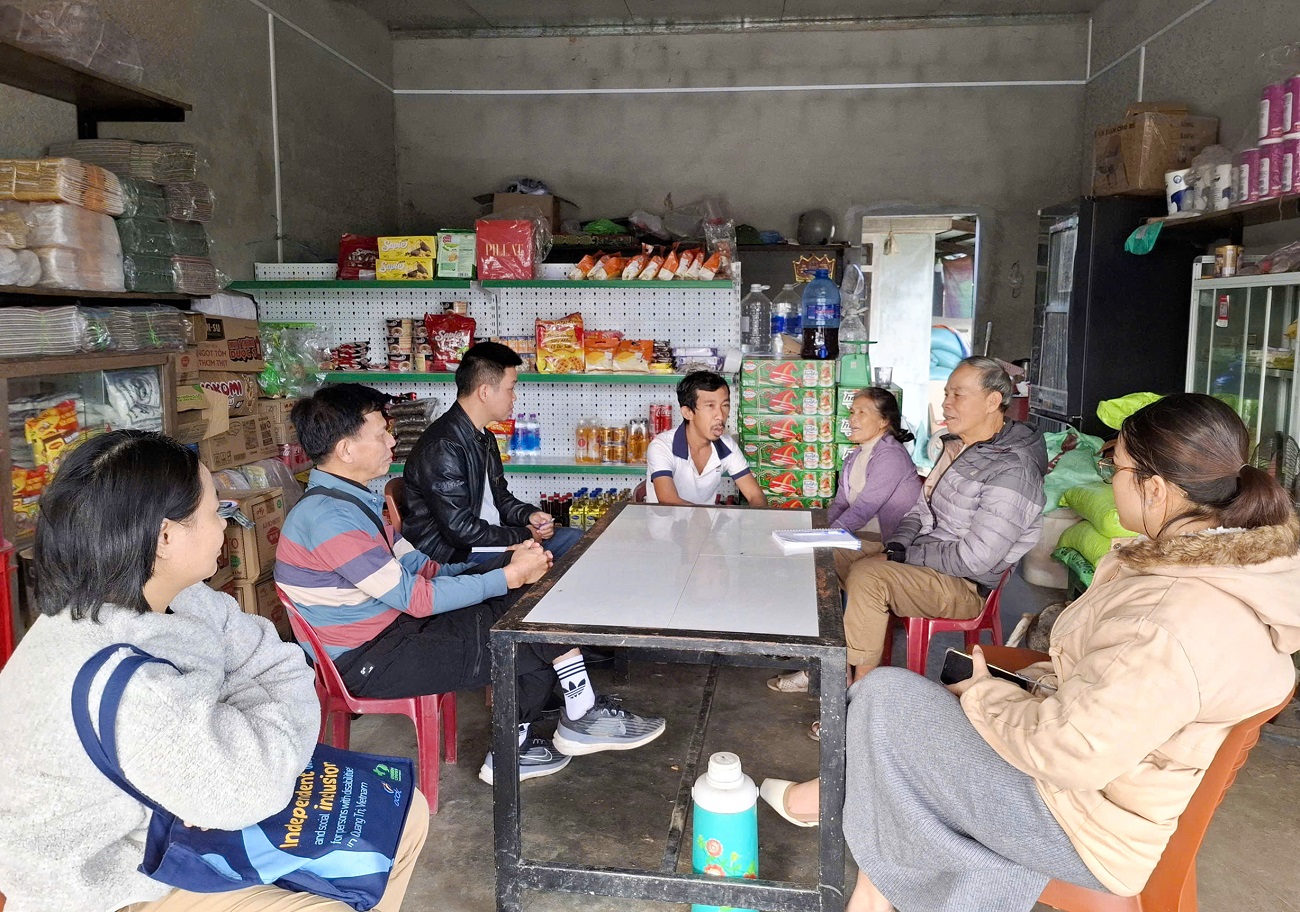
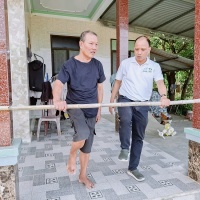
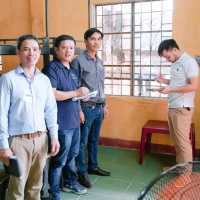
The project’s mid-term monitoring team worked and held direct discussions with a household of a person with disabilities running a small grocery business, in order to assess the implementation progress and the effectiveness of the supported livelihood activities
The results achieved during the mid-term monitoring period showed that, livelihood activities were implemented according to schedule and technical requirements of the project. Some specific observations and results achieved include: the chicken flock is growing and developing well, with a low mortality rate; households have proactively maintained and expanded their trading activities of selling goods, beverages, and breakfast with greater frequency; garment manufacturing orders were regularly received by persons with disabilities, with an increasing number of orders and more stable working hours. In addition, the equipment, machines and adjustments to the farm, house, and facilities provided through livelihood support activities have proven effective, making it easier for persons with disabilities to develop their livelihoods, reducing physical effort and improving the overall effectiveness of their livelihood activities.
These initial results showed that the income of households with persons with disabilities has gradually stabilized, contributing to improving living conditions and enhancing economic self-reliance. At the same time, the morale of persons with disabilities has improved significantly, manifested in increased joy, enthusiasm, and confidence in life and in participating in livelihood activities. Especially, the project has observed the active and proactive participation of many persons with disabilities in the supported livelihood groups, thereby contributing to strengthening cohesion, sharing experiences and mutual support. Through mid-term monitoring activities, the project has also promptly identified advantages, determined existing difficulties and obstacles, and proposed appropriate adjustments to improve implementation effectiveness in the next phase. To date, many activities have shown initial positive and practical results, as evidenced by the feedback, evaluations, and satisfaction of persons with disabilities participating in the project.
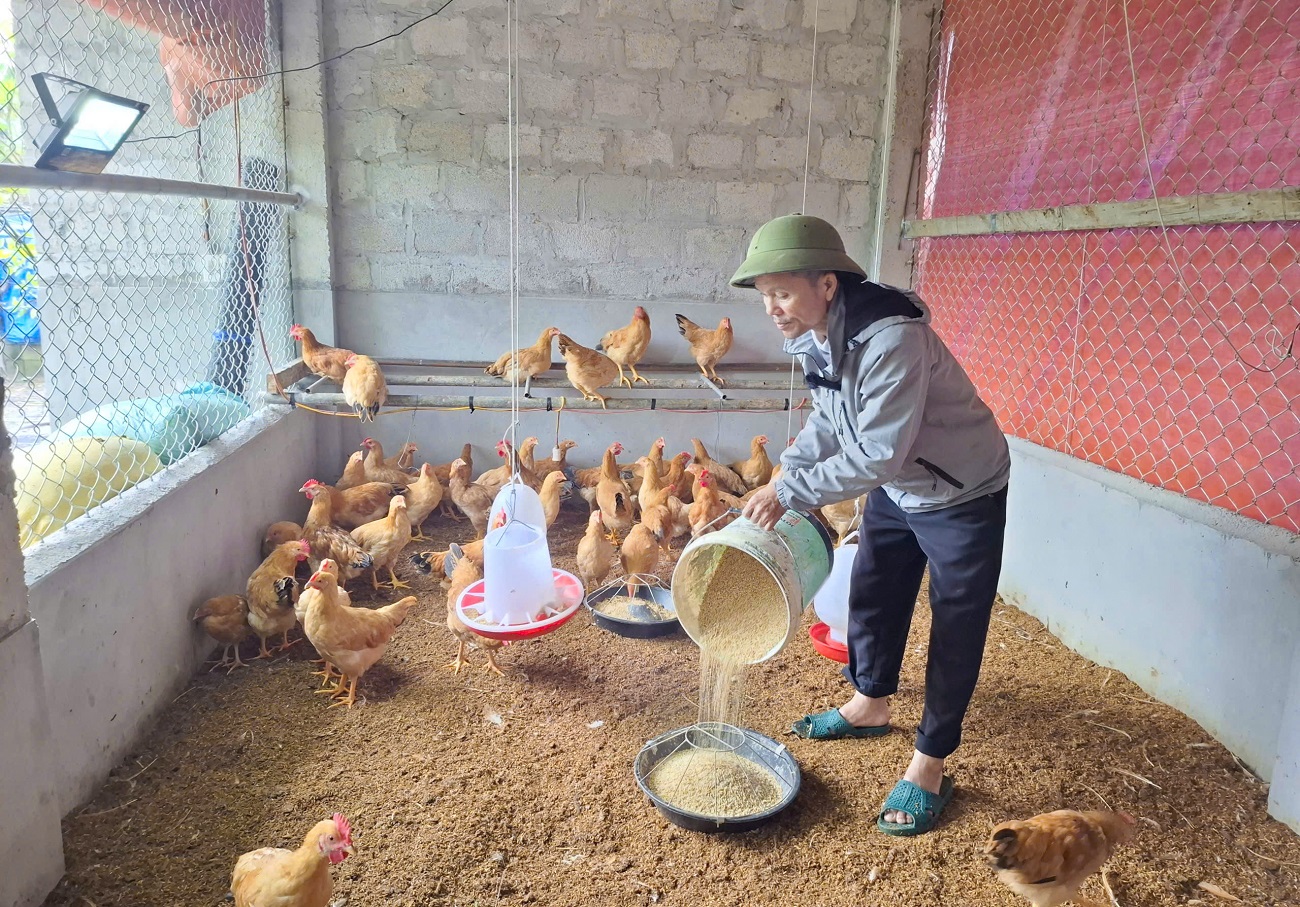
A household of a person with disabilities is managing the chicken-raising model supported by the project, contributing to sustainable livelihood development and improved living conditions
Mrs. B.T.C, a person with disabilities in Phu Bai ward, shared: “First, I would like to say thank you for the project. Thanks to some of the supporting equipment, I have saved a lot of time preparing breakfast items. On the first day of cooking sticky rice using an electric cooker, I sold out very quickly and had more time to take care of my children. I will try my best not to let the project down.”
Mr. D.D.D, a person with disabilities and a victim of Agent Orange in Phu Ho commune, said: “The guidance and technical support activities for chicken farming in the project are very useful and practical. Learning theory combined with field trips and receiving technical advice right at my household, such as using a banana shredding machine and making biological bedding, helped me remember and apply the knowledge more effectively.”
Mrs. L.T.T.P, a person with disabilities in Thanh Thuy ward, shared: “I am truly grateful to the Inclusion Project 1, ACDC and the project team for their constant care, encouragement, support, and livelihood assistance to me – a member of the Huong Thuy Women with Disabilities Club. Thanks to the support with sewing machines, overlock machines, display cabinets, tables and chairs, and the provision of access to sewing facilities, I have gained more motivation, confidence, and opportunities to continue pursuing my sewing career and improve my life.”
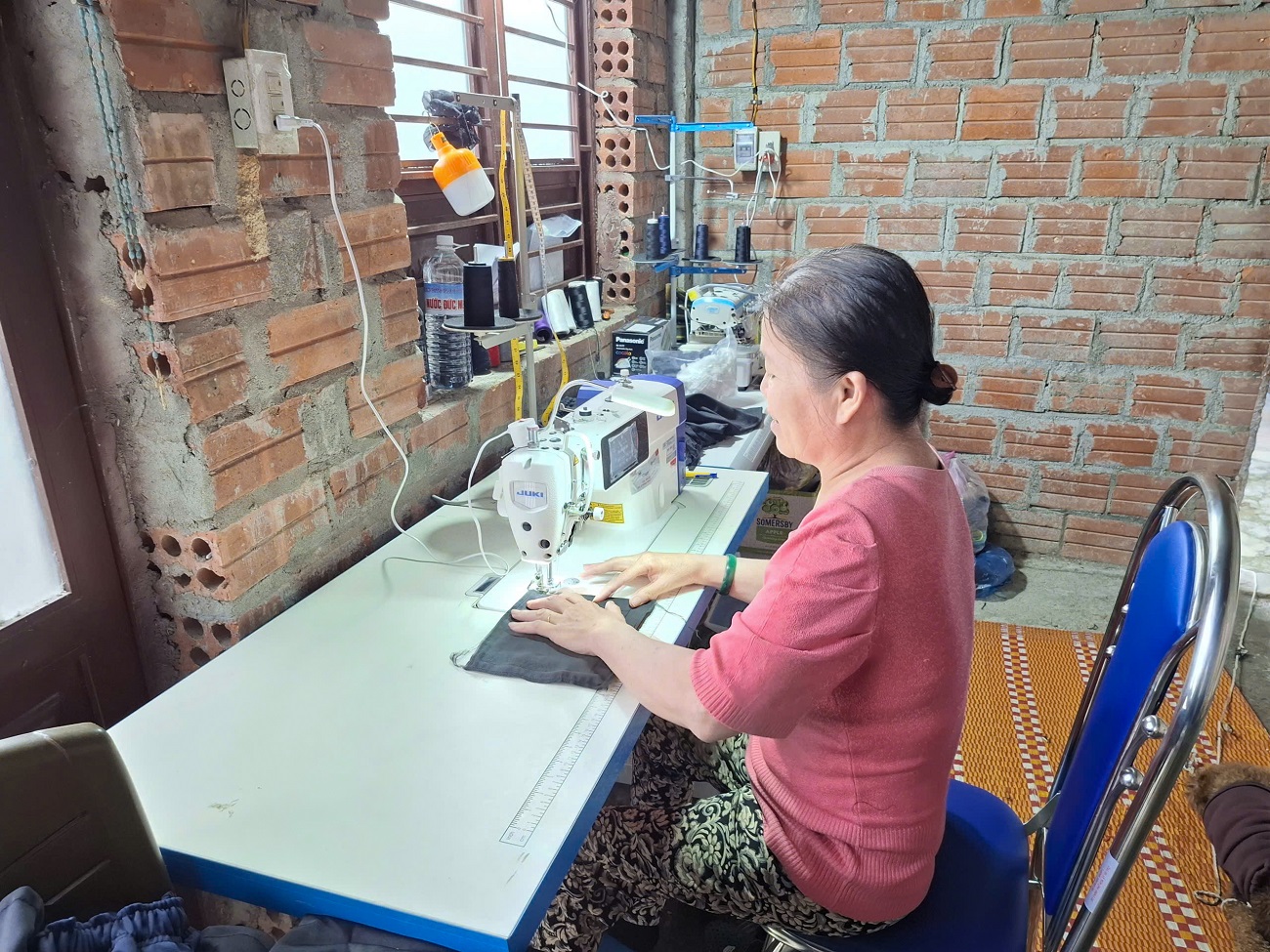
The person with disabilities is delighted to do sewing work at home using machinery and equipment provided by the project, helping create employment and generate stable income for the family
Over the past period, with the support of the technical advisory and project team, the activities on monitoring, support, and livelihood guidance have been carried out directly at home on a regular and more frequent basis. This has helped to promptly address difficulties in the process of guiding and implementing livelihood support activities. Through this, persons with disabilities and their families have gradually increased their initiative, effectively implemented livelihood plans, and contributed to improving income and stabilizing their lives. The series of livelihood support activities for persons with disabilities in Hue city is part of the project “Supporting the Improvement of Quality of Life for Persons with Disabilities in Provinces Heavily Affected by Agent Orange”, implemented in Quang Tri province, Hue and Da Nang cities. The project is funded by the US Government and led by the National Action Center for Toxic Chemicals and Environmental Treatment (NACCET). ACDC is one of the implementing partners under the management of the Center for Creative Initiatives in Health and Population (CCIHP).