

Activity
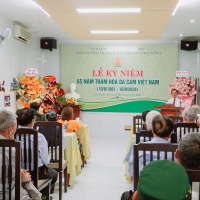
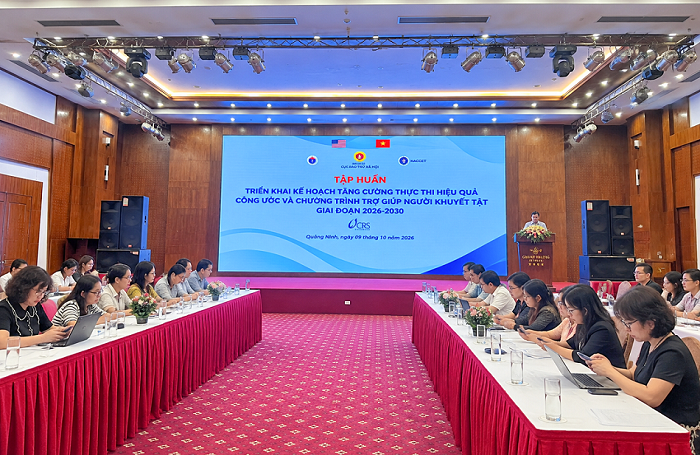
On the morning of September 8, 2021, more than 130 delegates participated in the online ceremony to launch The Second Rapid Assessment of the Socio-Economic Impacts of Covid-19 on People with Disabilities organized by UNDP Vietnam and Action to the Community Development Institute (ACDC).
The ceremony was attended by Ms. Diana Torres - Assistant Resident Representative of UNDP Vietnam, Ms. Lan Anh Thi Nguyen - Director of ACDC, staff members of UNDP Vietnam and ACDC, representatives of groups of people with disabilities and volunteers who supported during the process of conducting the survey.
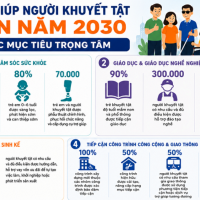
According to the speech of Ms. Lan Anh Thi Nguyen - Director of ACDC about the results of the first assessment, up to 70% of people with disabilities have been facing difficulties in accessing necessary medical care, treatment and rehabilitation services. 30% of respondents were made redundant due to Covid-19, 49% had their working hours reduced and 59% had their wages cut.
Ms. Diana Torres - Assistant Resident Representative of UNDP Vietnam said: “As UNDP, we are proud to have taken an active role in promoting a disability-inclusive response to COVID-19 after the first assessment on Disability-Inclusive Response to COVID-19 conducted in March and April 2020. To implement the recommendations on addressing the challenges faced by Persons with Disabilities as identified in the First Rapid Assessment, UNDP has been striving to take advantage of opportunities created by new working styles, including home-based or online employment, and to accompany Persons with Disabilities in the rapid growth of digitalization as a result of Covid-19 and the Industrial Revolution 4.0. Persons with Disabilities can benefit from flexible work hours, more economical home-based reasonable accommodations, less barriers in mobility, and less stigma against people with disabilities in the workplace. UNDP with the generous support of the Government of Japan have also provided the program trainings, workshops on digital skills for persons with different types of disabilities to adapt in the new digitalization age after Covid-19.”
In addition, she clearly specified 3 main messages in this assessment by stating: “I would like to emphasize that whichever direction we take in responding to Covid-19, persons with disabilities must be not simply seen as beneficiaries, but as agents of change who understand best the challenges they face, the most effective ways to overcome, and stand ready to make important contributions to the country’s recovery. To echo the central principle underpinning the UN Convention on the Rights of Persons with Disabilities, ensuring the full participation of persons with disabilities in decision making which impacts upon them: “Nothing about us without us”.”
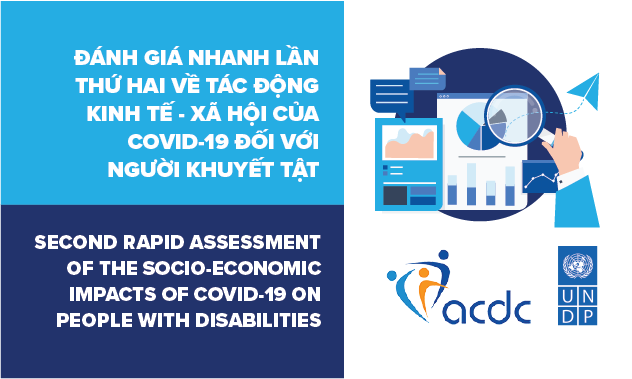
During the event, delegates were introduced to the time frame, methodology and instructions to fill out the questionnaire for each different type of disability. The assessment was carried out to figure out challenges/difficulties encountered by people with disabilities and their families in the context of the Covid-19 pandemic. The survey participants have all types of disabilities and come from provinces and cities across the country, from the North to the South. The questionnaire includes sign language for Deaf Persons.
The assessment results are valuable data for UNDP and ACDC to collaborate with government agencies and stakeholders to promote the inclusion of people with disabilities in the context of the pandemic and ensure they receive necessary support. The participation of people with disabilities is a strong commitment to the goal of ensuring their inclusion through strategies for recovery and response to Covid-19.
Join the quick assessment at:
Survey without sign language: https://bit.ly/3DTrtLY
Survey with sign language: https://bit.ly/3hbUjNO
Deadline: Thursday, 30 September 2021
Instruction to join the assessment for Deaf Persons:
Northern Vietnam: https://youtu.be/XV11U3C2AdI
Southern Vietnam: https://youtu.be/CXB3D9Ig2GM