

Hoạt động

As part of the 2026 Project Planning Workshop for the “Improving the quality of life of persons with disabilities in provinces sprayed with Agent Orange” Project, Humanity & Inclusion (HI), together with provincial Departments of Health, implementing partners, and local stakeholders, reviewed key achievements in 2025 and discussed directions for the coming year.
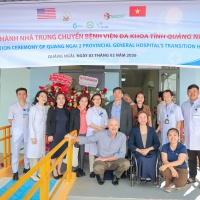
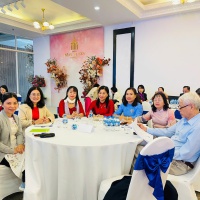
The workshop was attended by representatives from the U.S. Embassy in Vietnam, leaders of the Gia Lai Department of Health, the National Action Centre for Toxic Chemicals and Environmental Treatment (NACCET), project implementing partners, and delegates from medical facilities across the project areas. The Action to the Community Development Institute (ACDC) is one of the key partners implementing project components on direct support and livelihood assistance to improve living conditions and social participation for persons with disabilities.

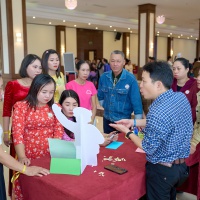
Mr. Nguyen Quoc Hung - Representative of the National Action Centre for Toxic Chemicals and Environmental Treatment (NACCET) delivers the opening remarks at the meeting
During the workshop, participants highly appreciated the effectiveness of the multidisciplinary rehabilitation (MDR) model, which has shown positive progress in strengthening the capacity of grassroots health workers, improving the quality of care, and enhancing access to services for persons with disabilities in the community. In addition to reviewing results, delegates shared valuable recommendations to enhance the sustainability of the MDR model. Many suggested closer linkage between rehabilitation interventions and the health insurance mechanism to ensure long-term service continuity. At the same time, training and technology transfer for grassroots-level staff – particularly commune health officers who directly manage and monitor persons with disabilities – should be further strengthened. Delegates also emphasized the importance of applying digital tools to monitor persons with disabilities post-intervention, promoting an interconnected referral model among service levels to optimize support delivery.
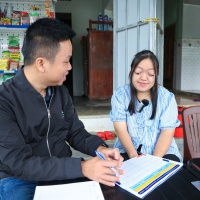
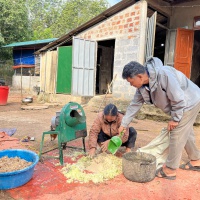
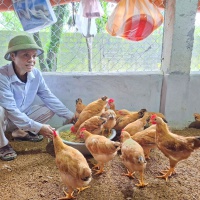
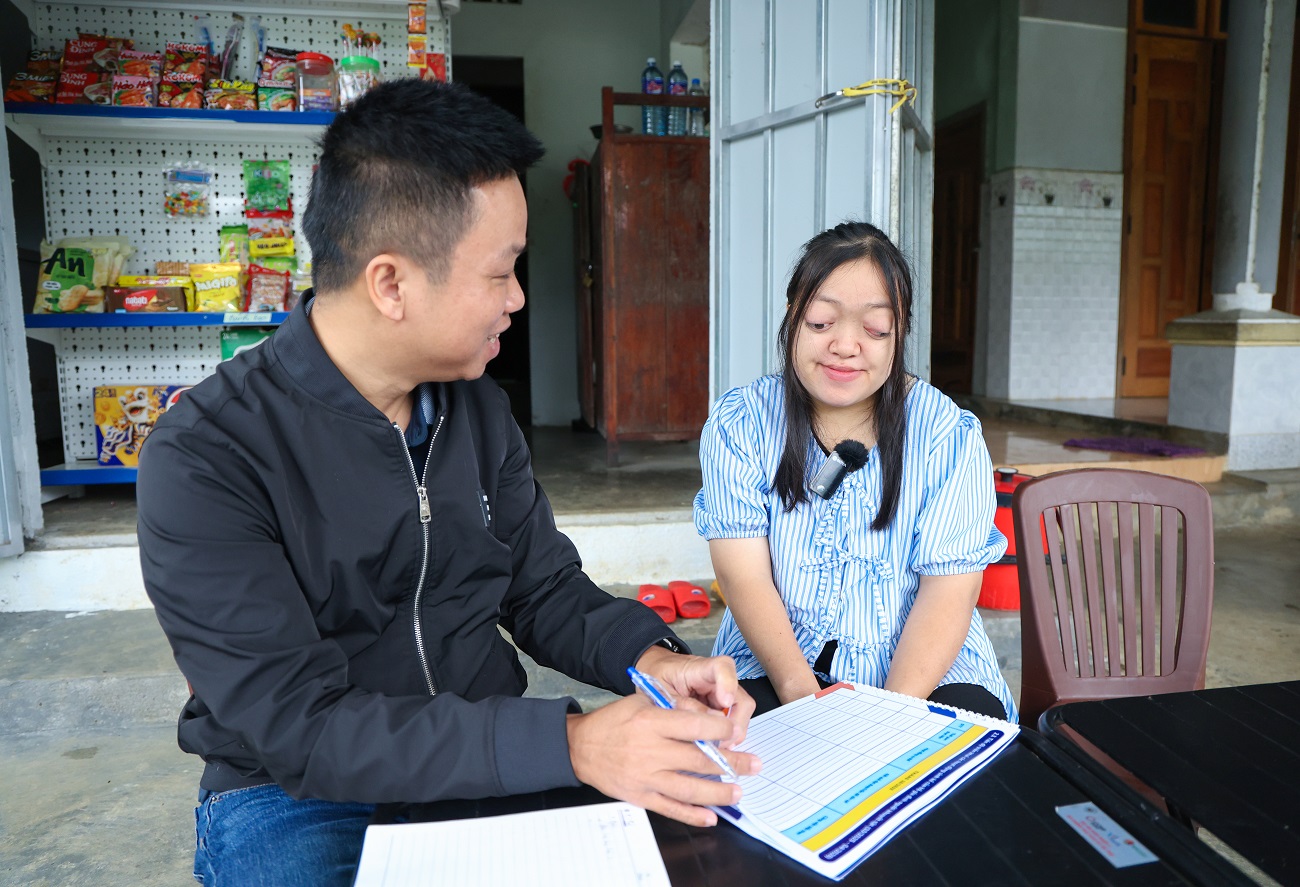
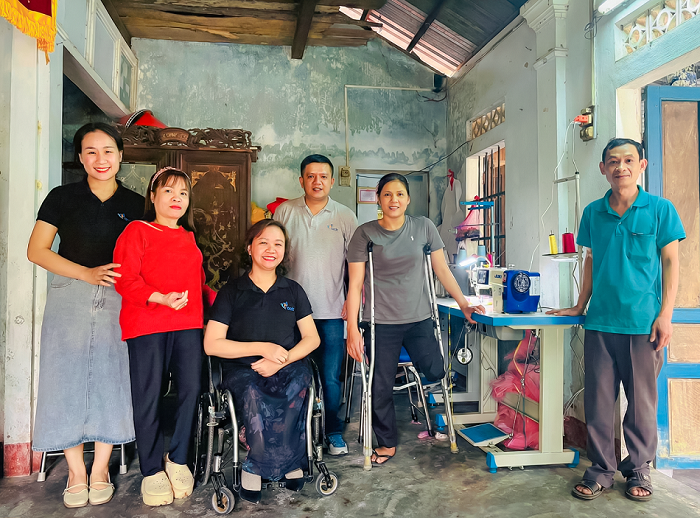
In the discussion session, special attention was given to two core activity groups implemented by ACDC – livelihood support and direct supports for persons with disabilities. Delegates recognized that the livelihood models currently in place have proven effective, equipping persons with disabilities with new skills, confidence, and stable income sources. Small-scale business initiatives such as juice stalls, coffee shops, tailoring, and electrical repair have leveraged the strengths of persons with disabilities while aligning with local realities. Some participants suggested that ACDC consider adjusting support indicators to better reflect real effectiveness, for instance by implementing livelihood activities for more persons with disabilities who have successfully completed rehabilitation and reintegrated into the community (approximately 25% per health station).
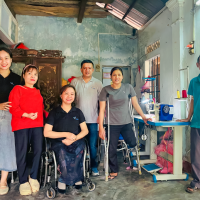
Regarding direct support activities, delegates commended ACDC’s flexibility and continuity, particularly in ensuring that assistance matches the specific conditions of each person with a disability at the time of assessment. Notable suggestions included increasing support for children with disabilities – especially those with autism spectrum disorder or intellectual disabilities – to ensure continuous intervention, as well as improving facilities at rehabilitation units (e.g. sound systems and movable dining tables for patients with significant disabilities) to enhance care quality. Delegates noted that ACDC’s livelihood and direct support models currently serve as an integrated component within the multidisciplinary rehabilitation chain – practical, needs-based, and foundational for sustainable inclusion.

Ms. Nguyen Thi Lan Anh, Director of ACDC, presented a sharing on livelihood activities and direct support for persons with disabilities
One of the key highlights recognized by local partners was the impact of ACDC’s livelihood and direct support activities. Representatives from medical centers, Departments of Health, and partner organizations agreed that these interventions have been meaningful in helping persons with disabilities stabilize their lives, strengthen independence, and reintegrate into the community after participating in multidisciplinary rehabilitation. Beyond individual impact, the livelihood models also help reinforce community support networks and encourage local authorities to sustain and expand inclusive intervention models.
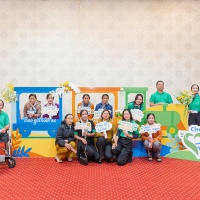
At the conclusion of the workshop, local delegates agreed that ACDC’s livelihood and direct support initiatives remain among the project’s most outstanding achievements – contributing significantly to improving the quality of life and promoting social participation for persons with disabilities after rehabilitation. Through these models, many persons with disabilities have found employment, increased their income, and gained confidence to participate in community life. These outcomes reflect not only the success of an intervention program but also the shared commitment to the principle of “leaving no one behind” in building sustainable communities.