

Hoạt động

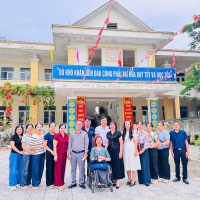
As part of a series of livelihood support activities for persons with disabilities, from 7–13 July 2026, the Action to the Community Development Institute (ACDC), in collaboration with the Gia Lai Provincial Department of Health and the Quang Ngai Provincial Department of Health, with technical support from livelihood specialists and local agricultural extension officers, conducted mid-term assessments and the second round of livelihood grant disbursements for 62 households of persons with disabilities across the two provinces. During this phase, the project provided more than 200 million VND, bringing the total investment in livelihood models for persons with disabilities to over 800 million VND.
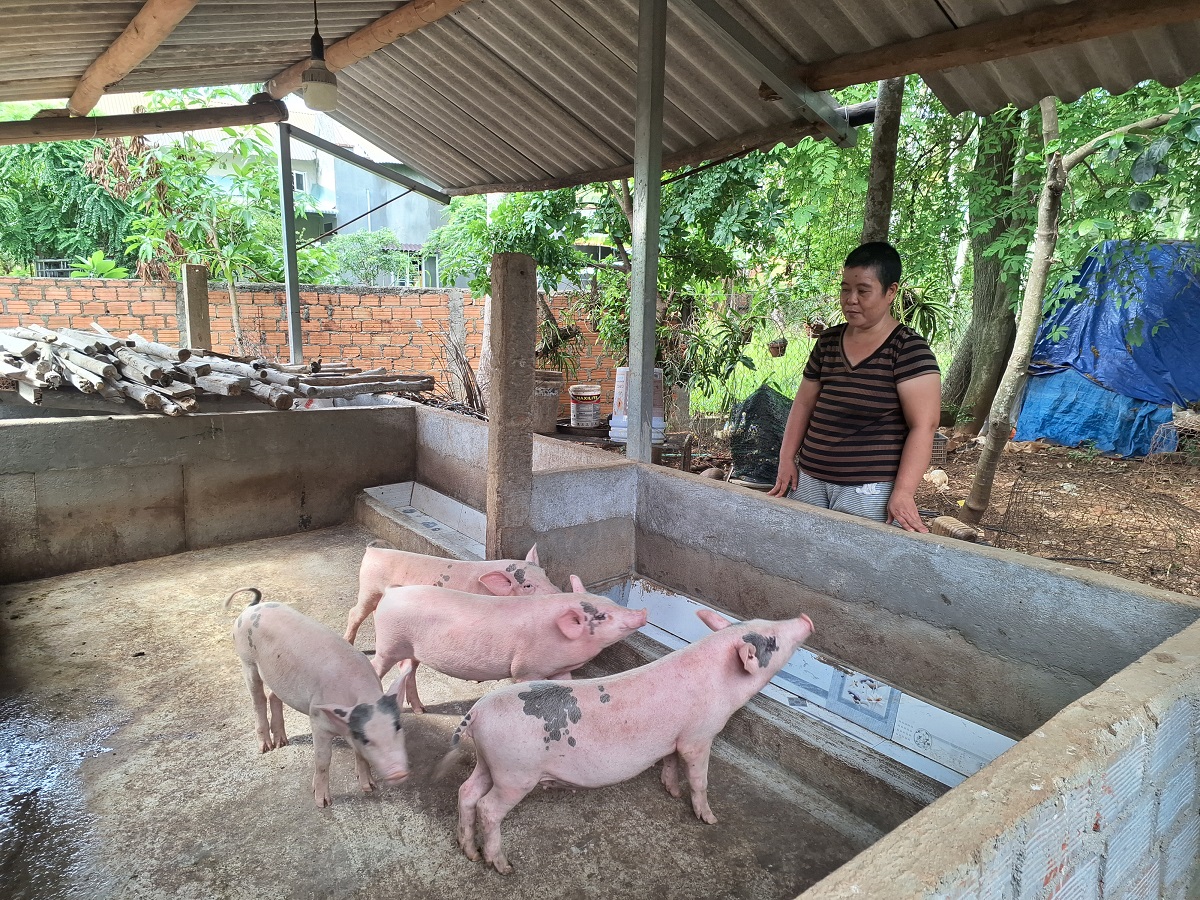
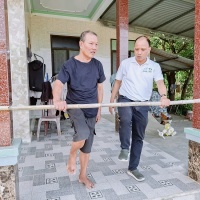
A project beneficiary cares for pigs at home after receiving support to develop a livestock farming model
Since the livelihood models were launched in April 2026, the project has not only provided initial financial support but has also accompanied beneficiary households through technical guidance, business coaching, and regular home-based monitoring. Activities were implemented in Hoai Nhon Ward, Tam Quan Ward, An Hao Commune, Van Duc Commune, and Phu My Commune (Gia Lai Province), as well as Dak To Commune, Ngok Tu Commune, Duc Nong Commune, and Bo Y Commune (Quang Ngai Province). For small business models, including grocery shops, beverage stalls, bicycle and motorcycle repair services, beauty services, etc, beneficiaries received guidance on financial management, effective use of project funds, and business planning tailored to their household circumstances. Mid-term assessment results showed that many businesses have generated positive outcomes, with monthly incomes increasing by 500,000 to 2 million VND. Several households have reinvested their profits to expand their businesses and diversify their products and services to better meet local demand.
Ms. N.T.P., a person with a physical disability from An Hao Commune, shared: "After receiving project funding to purchase hairdressing materials, I was able to offer more services and attract many new customers. This summer, I used my profits to open a small beverage stall and start selling homemade cakes. Although I am busier now, my income has increased, which motivates me to keep working."
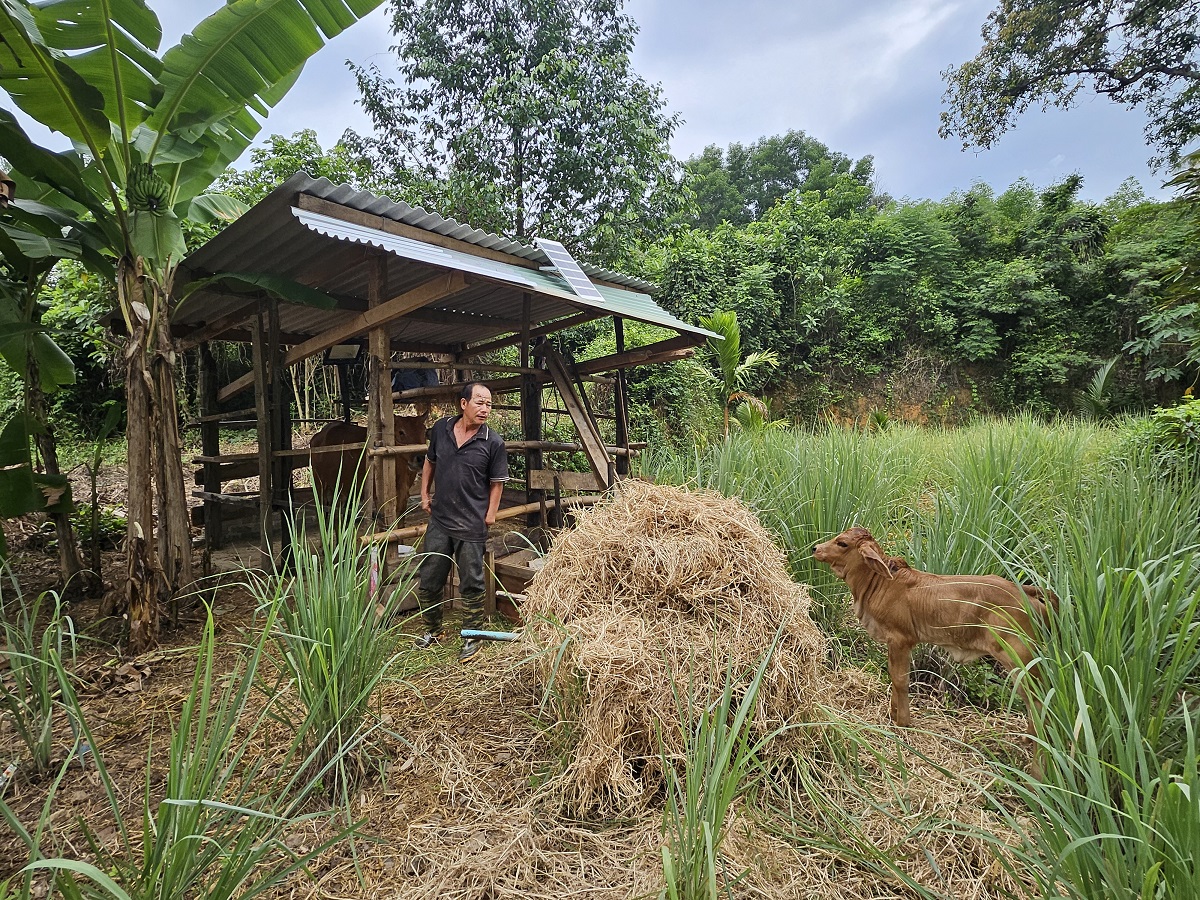
The cattle-raising model is being maintained and developed with technical guidance from specialists and local agricultural extension officers. It is a livelihood option suited to the actual circumstances of the household of a person with a disability
Alongside small businesses, agricultural livelihood models such as cattle, poultry, and pig farming have also been closely monitored through collaboration between agricultural experts and local agricultural extension officers. Beneficiaries received technical guidance on improving livestock housing, selecting suitable breeds, preventing diseases, and proper animal care. At the time of the mid-term assessment, many short-cycle livestock models had already generated their first harvests or expanded their herds, creating initial income for beneficiary households. Longer-term models have continued to develop steadily and are expected to generate higher returns in the coming phases.
Y.B, a woman with a physical disability from Bo Y commune (Quang Ngai Province), shared: "Since I opened the shop, I have been earning an extra 150,000 VND a day on average. It is not much, but it is enough to put food on the table for my two children and cover our household expenses. I am also saving part of the profit so that I will have money for my children's school fees when they start school. I will try to expand my range of grocery products to secure a stable income, just as the Project staff have guided me."
Beyond improving household income, the livelihood models have also contributed to changing perceptions, strengthening self-confidence, and enhancing the role of persons with disabilities within their families and communities. In An Hao Commune, Ms. V.T.H.M., a person with a psychosocial disability who previously stayed at home and relied heavily on family members, now actively cares for her chickens, takes on more household responsibilities, and plans to expand into other model using the profits earned from poultry raising. According to her family, they had once doubted her ability to manage livestock independently, but with continuous encouragement and support from the project and local officials, she has become increasingly confident and independent.
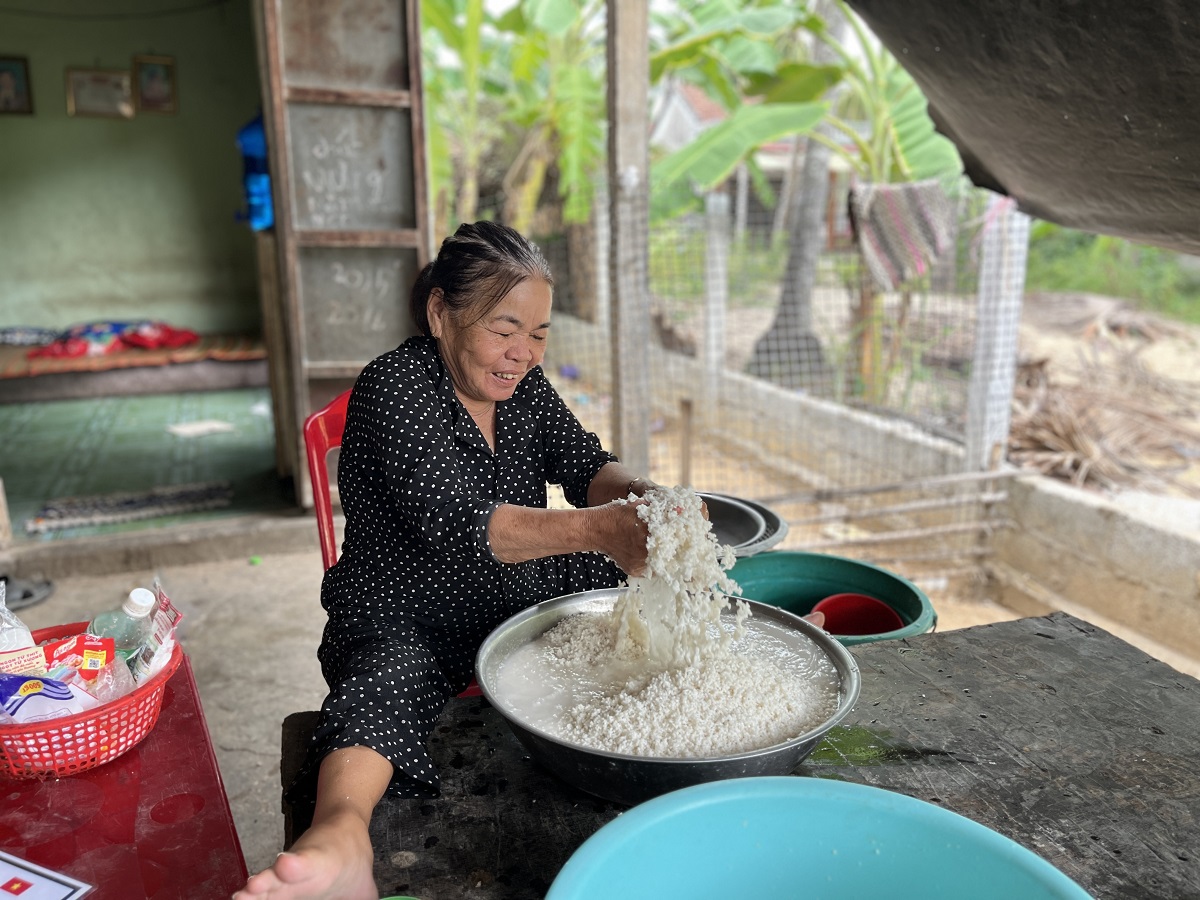
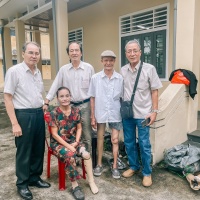
A project beneficiary processes rice-based products at home, gradually developing the livelihood activity and generating a stable source of income
The positive impacts of the livelihood models have also been recognized by local authorities. Mr. N.V.H., a case manager of Hoai Nhon Ward, commented: "Through this livelihood support project, we have been able to accompany and assist persons with disabilities more effectively. Seeing them gain employment, earn an income, and become more confident in their daily lives gives us even greater motivation to continue supporting them in the long term."
The mid-term assessment confirms that the livelihood models have begun to demonstrate their effectiveness in increasing income, strengthening self-reliance, and enabling persons with disabilities to play a more active role in their families and communities. At the same time, the project has identified several challenges, including unfavorable weather conditions, livestock disease risks, and market fluctuations. In response, the project will continue strengthening monitoring, providing technical assistance, and delivering timely support to help beneficiary households sustain, expand, and develop their livelihoods in a more sustainable manner.
These livelihood support activities are implemented under the project "Improving the Quality of Life of Persons with Disabilities in Provinces Heavily Sprayed with Agent Orange" in Gia Lai and Quang Ngai. The project is funded by the United States Government, with the National Action Center for Toxic Chemicals and Environmental Treatment (NACCET) serving as the project owner. ACDC is one of the implementing partners under the management of Humanity & Inclusion (HI).
Translator: Nguyen Dac Thanh