

Hoạt động
On 13 – 14 August 2026, Action to the Community Development Institute (ACDC), in coordination with the Hue City Association for the Protection of People with Disabilities and Orphans and relevant agencies, completed the provision of prosthetic limbs and orthotic devices to 86 persons with disabilities and Agent Orange victims in 11 communes and wards across Hue City. This activity followed the prosthetic and orthotic fitting and trial process conducted in July 2026. The activity was implemented under the project “Livelihood Support and Quality of Life Improvement for Persons with Disabilities and Agent Orange Victims in Hue City,” funded by Green Cross Switzerland (GCCH) through ACDC.
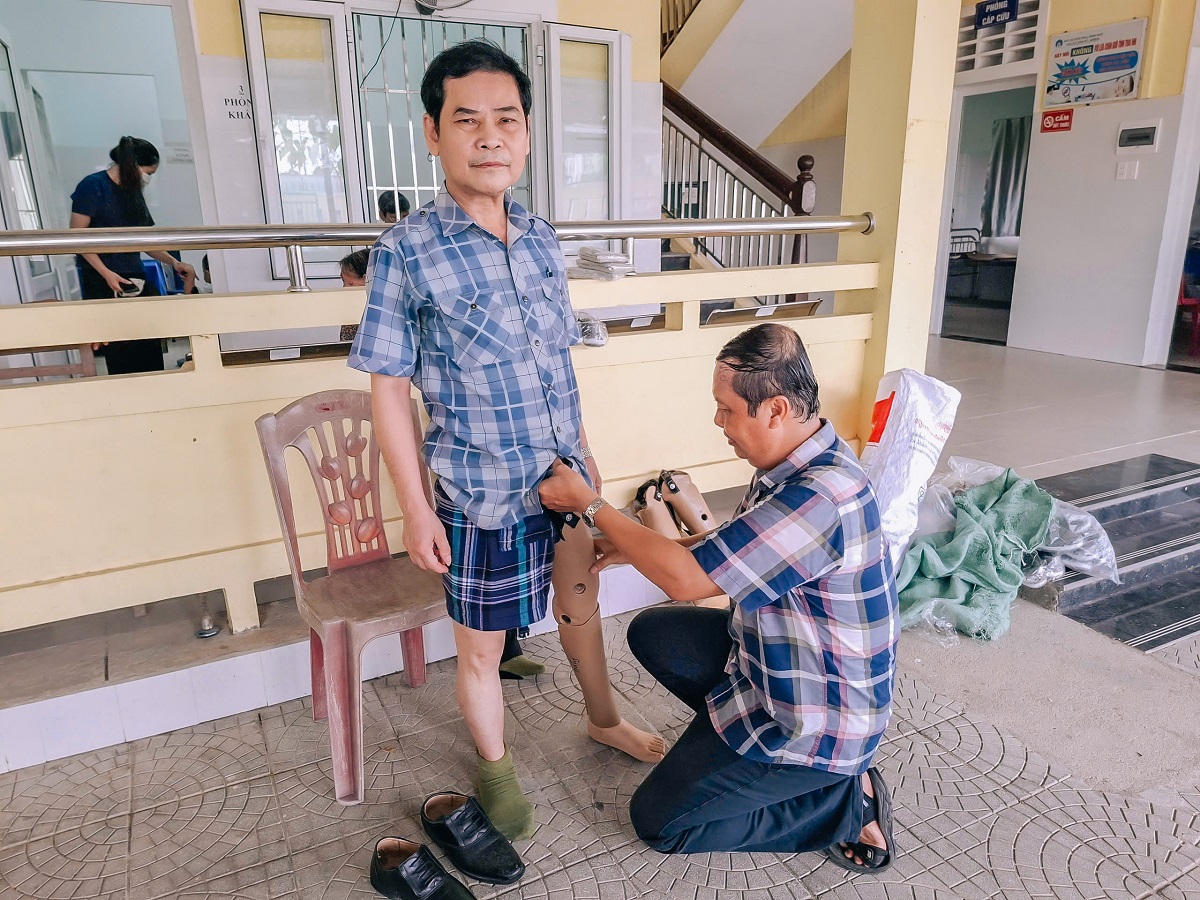
A technician checks and adjusts a prosthetic leg to ensure proper fit and comfort for the person with disability during use
At the distribution event, PWDs were able to use the completed products directly and received guidance from technicians on how to use, adjust, and maintain them. The technical team also checked the fit, comfort, and usability of each product during mobility and daily activities. Most beneficiaries expressed their happiness and satisfaction with the completed products. In particular, many shared that the new products were lighter, more convenient, and better suited to their needs than the assistive devices they had previously used.
Mr. P.T.B, a landmine survivor from Dan Dien Commune, Hue City, shared: “Previously, using my old prosthetic leg made walking difficult and caused considerable inconvenience in my daily activities. From today, after receiving the new prosthetic leg, I feel that walking is lighter, more comfortable, and safer. I would like to thank the project, GCCH, and ACDC for their attention and valuable support to Agent Orange victims, landmine survivors, and persons with disabilities in the local community.”
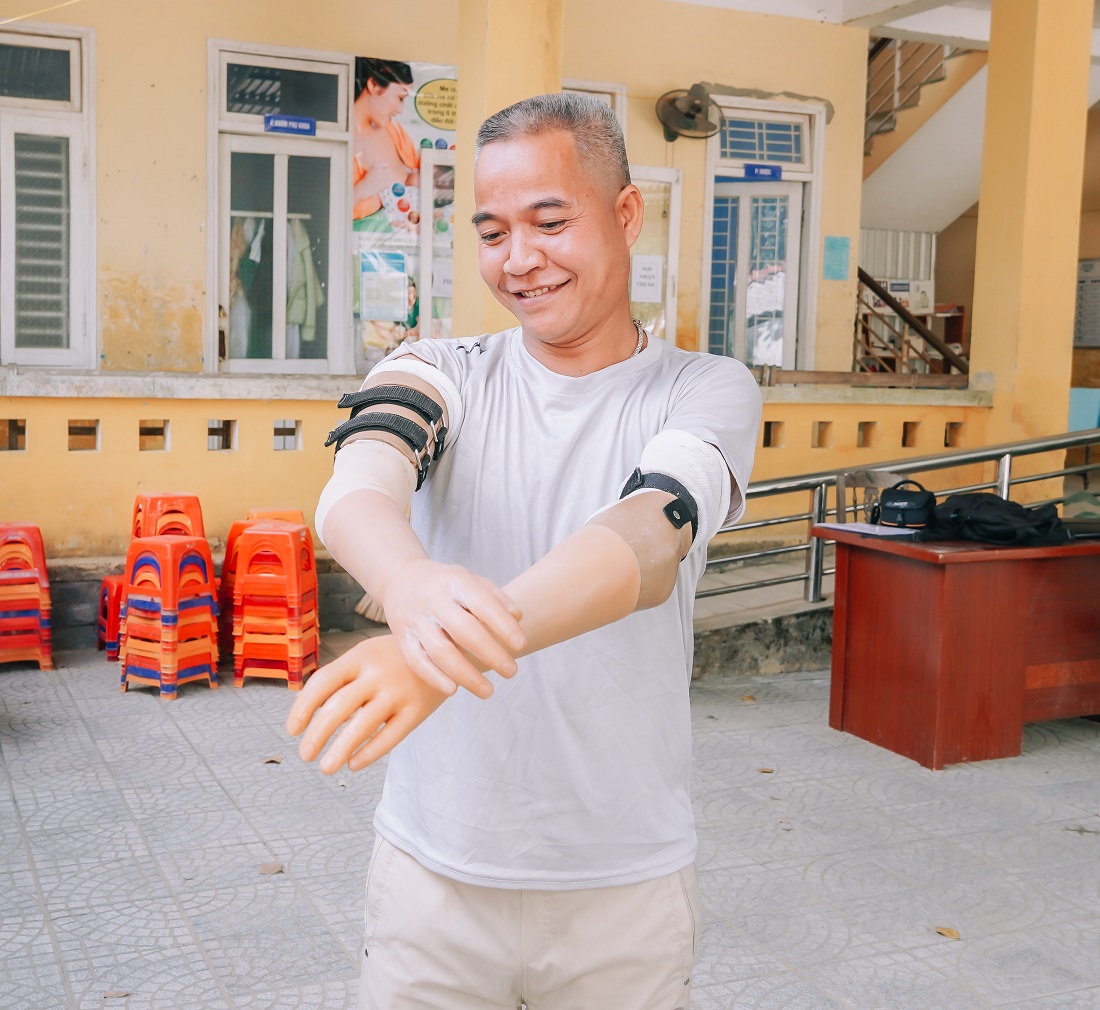
A person with disability tries the completed prosthetic arm, checking its mobility and comfort during use
Mr. L.B., a PWD from Phu Bai Ward, Hue City, shared: “I have hemiparesis due to the effects of a cerebrovascular injury. After receiving the orthosis from the project, I can walk more steadily and confidently, without needing to use a walking cane for support.”
For people receiving prosthetic limbs or orthotic devices for the first time, having access to a suitable product not only improves mobility but also increases confidence in daily activities. The provision of prosthetic limbs and orthotic devices is an important step in the rehabilitation support process, helping persons with disabilities improve their mobility, perform activities of daily living, and enhance their independence. For those who have previously experienced difficulties using old or unsuitable prosthetic limbs, individually designed products provide better opportunities for them to participate more actively in family and community life.
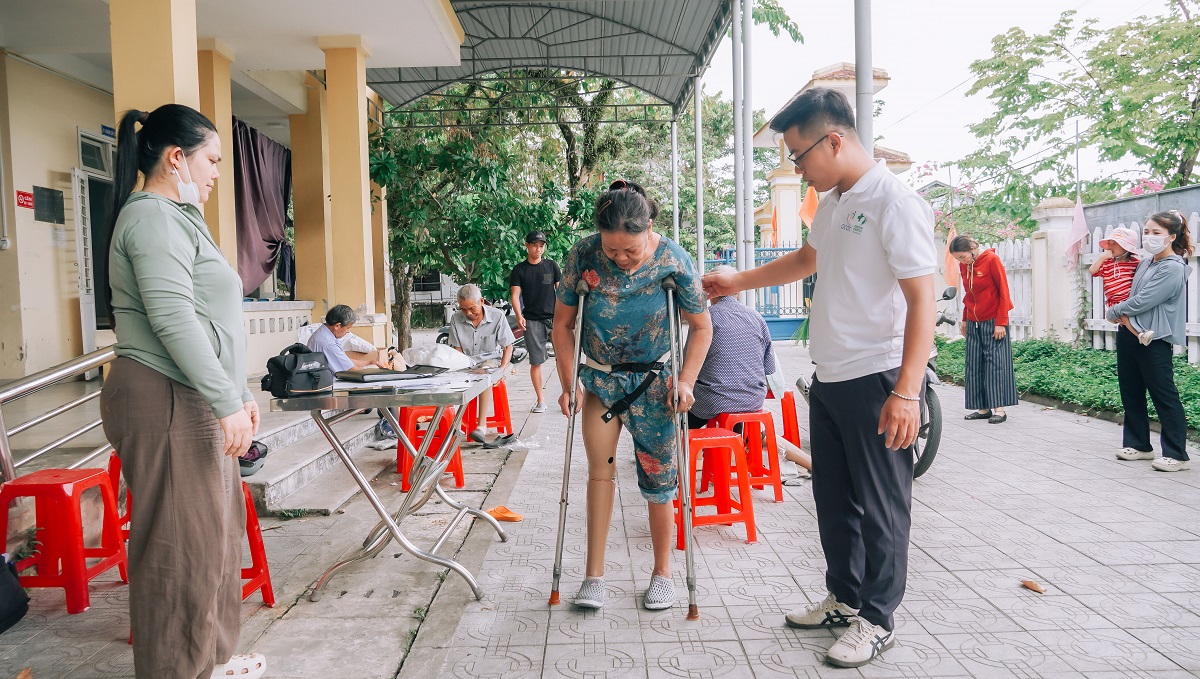
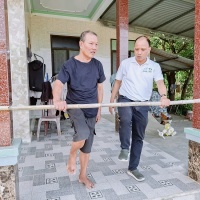
A beneficiary practices walking with a prosthetic leg/orthotic device under the guidance and support of project staff at the distribution event
This distribution activity also marked the completion of a comprehensive support process, from screening, functional assessment, and needs identification to measurement, fabrication, trial fitting, adjustment, distribution, and user guidance. This approach aims to ensure that the support provided is better tailored to the individual needs and characteristics of each person with a disability.
ACDC hopes that the prosthetic limbs and orthotic devices provided will continue to support recipients in their daily activities, education, work, and social participation, thereby contributing to greater independence, improved quality of life, and enhanced inclusion of persons with disabilities in the community.
Translator: Nguyen Dac Thanh