

Hoạt động
On August 15 – 16 and 22 – 23, 2026, the Action to the Community Development Institute (ACDC), in collaboration with the Organization of Persons with Disabilities – Protection of Persons with Disabilities and Orphans of Hue City , Hue City Rehabilitation Hospital, local authorities, and commune/ward health stations, organized the closing of home-based rehabilitation (RH) intervention cases for 78 persons with disabilities and Agent Orange victims. The activity is part of the project “Enhancing livelihood and well-being of persons with disabilities and Agent Orange victims in Hue City, Vietnam,” funded by Green Cross Switzerland (GCCH) through ACDC.
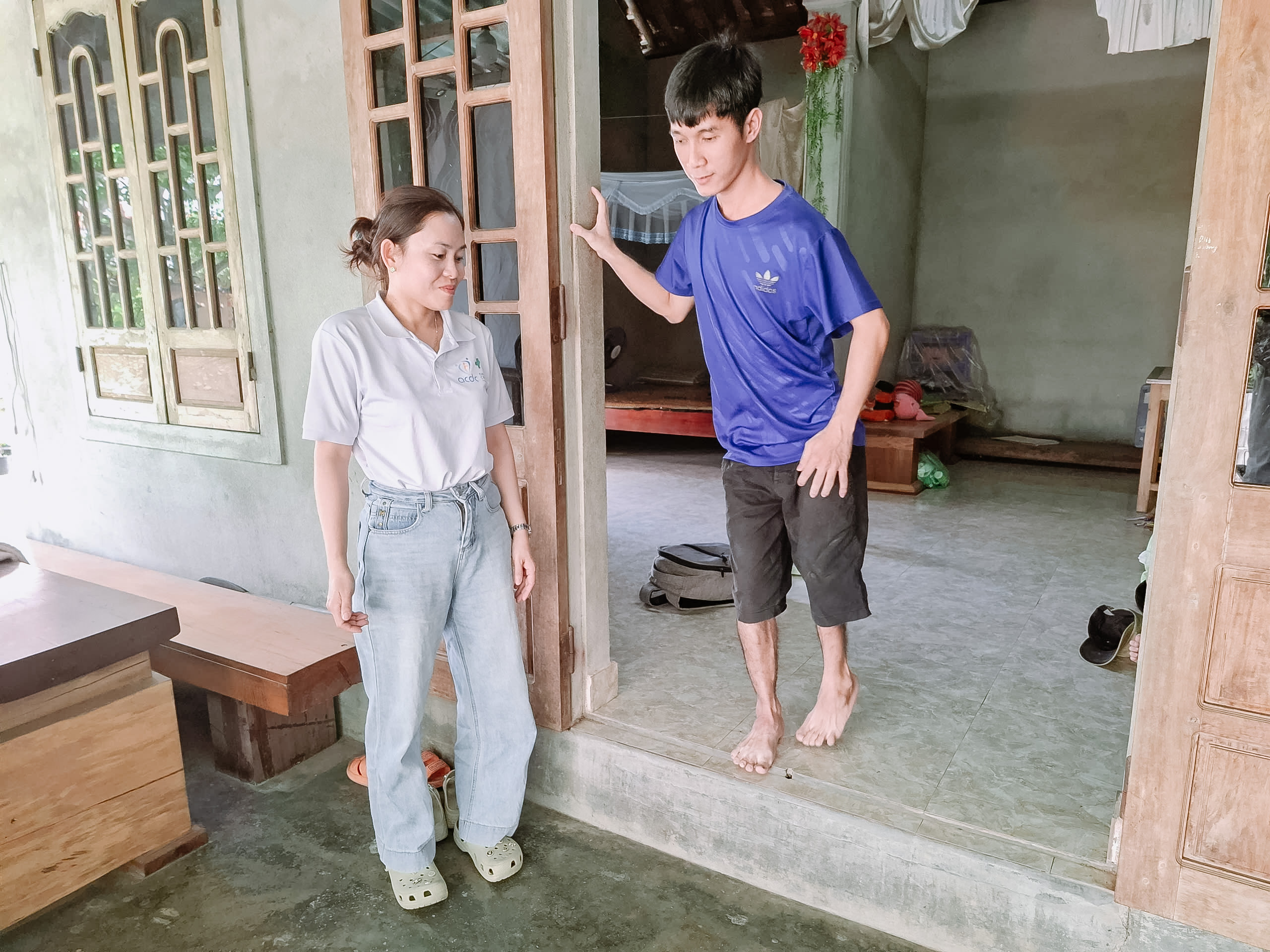
A person with a disability practices balance and mobility exercises at home under the supervision of a rehabilitation technician
This marked the final step in the home-based rehabilitation intervention process, following the assessment, goal setting, and implementation of intervention sessions tailored to the needs and abilities of each individual. According to the plan, each beneficiary received five home-based rehabilitation intervention sessions. Rehabilitation doctors and technicians guided persons with disabilities through physical therapy and occupational therapy exercises. The content was adapted to the goals of each individual case, focusing on improving mobility, muscle strength, balance, movement, pain reduction, and the ability to perform activities of daily living.
In particular, persons with disabilities were guided to practice activities closely related to everyday life, such as washing their faces, getting dressed, personal hygiene, grasping objects, and using household items. These occupational therapy activities not only helped improve the function of weakened body parts but also aimed to enhance self-care capacity and reduce dependence on others. Family members and caregivers were also instructed in appropriate techniques and exercises so that they could continue supporting persons with disabilities in practicing at home after each intervention session. This was an important factor in maintaining rehabilitation outcomes in daily life.
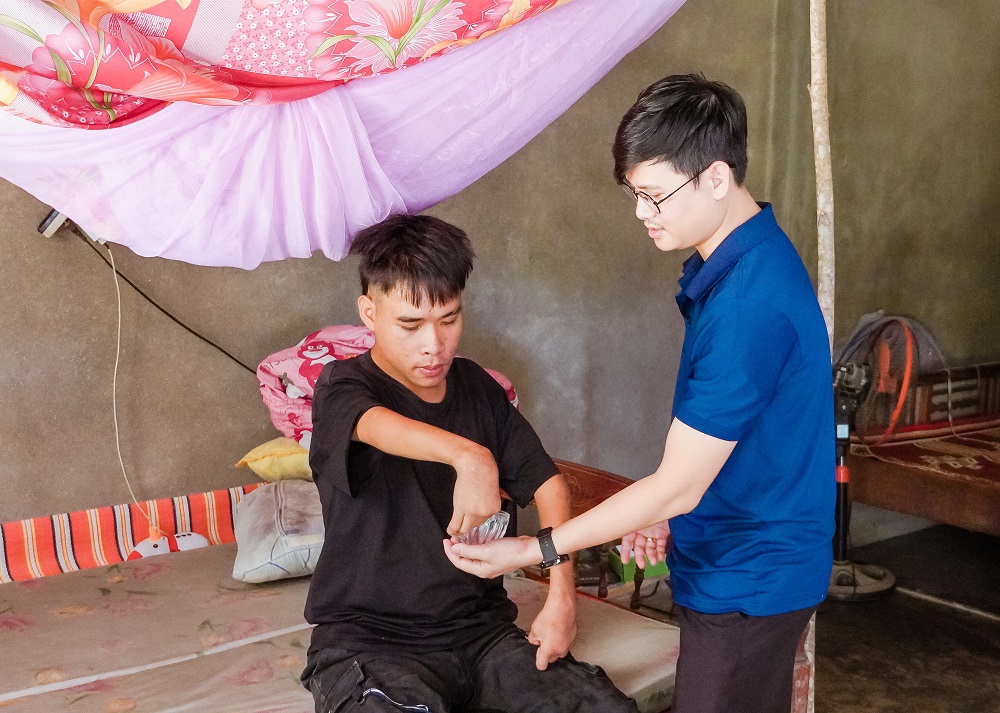
A person with a disability performs upper-limb exercises to improve grasping ability and activities of daily living
During the case-closing activity, rehabilitation doctors and technicians reassessed the beneficiaries’ conditions and the extent to which they had achieved the goals established at the beginning of the intervention process. Most beneficiaries achieved their intervention goals, with positive changes in mobility and the performance of daily activities. In addition to functional improvements, the activity also received positive feedback from persons with disabilities and their families. Receiving direct guidance at home helped beneficiaries better understand their conditions, learn how to practice appropriately, and become more proactive in their daily activities. The results demonstrate the practical value of delivering rehabilitation services directly within the living environment of persons with disabilities, combining physical therapy, occupational therapy, and caregiver guidance to improve independence and quality of life.
Mr. N.V.T - a person with a disability in Phong Dien Ward, shared: “Thanks to the doctors and technicians coming to my home and providing guidance, I have more exercises to practice every day. When the doctors first came, I still needed a tripod cane to walk, but now I no longer need it. I used to need my wife’s help to put on a shirt, but now I can dress myself, although I am still slow. I am very happy to see that I have improved and can do more things on my own than before.”
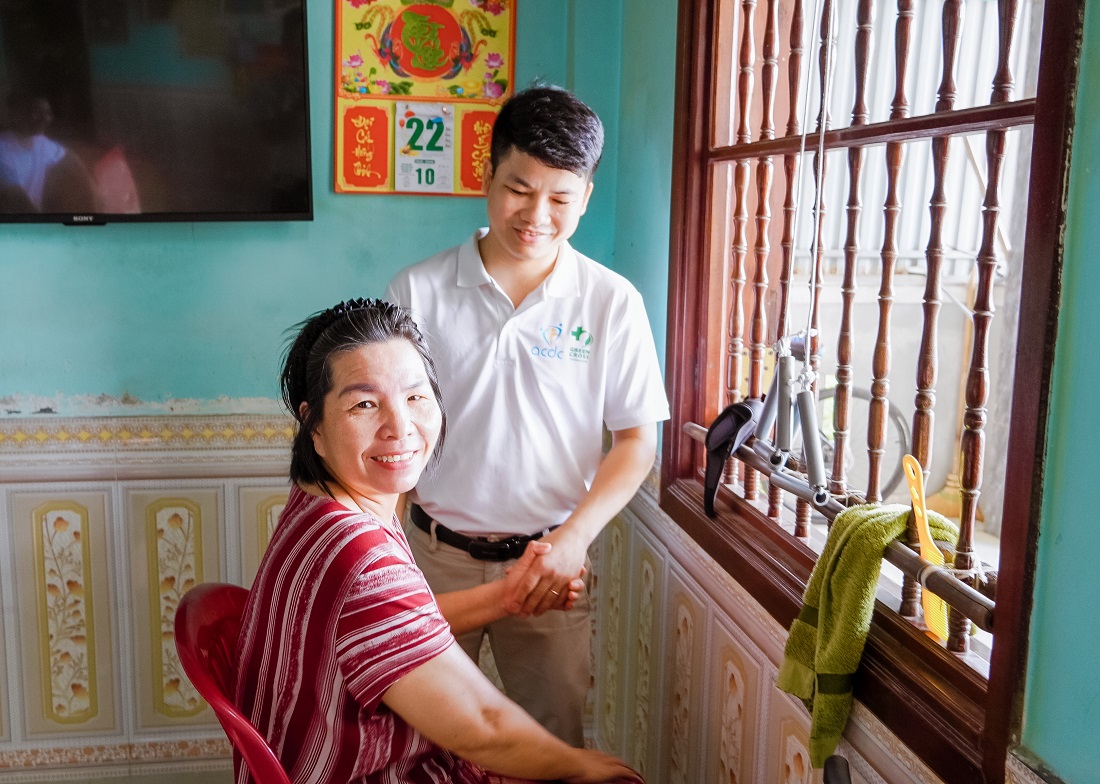
A rehabilitation technician guides a beneficiary in performing rehabilitation exercises at home
Mr. H.V.T - a person with a disability in A Luoi 5 Commune, said: “I previously had a stroke, which left me weak, and I also often became forgetful, so I mostly stayed in bed and did very little exercise. Since the doctor started coming to my home to guide me through exercises and even provided pictures of the exercises for me to put somewhere visible and follow, I have tried to practice every day. Now I feel that I have changed a lot. I used to stay indoors all the time, but now I can go outside, go out for leisure, and be more physically active. I can also dress myself now. I am very happy that I can do things that I once thought were very difficult.”
The case-closing activity marked the completion of a period of direct intervention while also opening a new stage of self-practice and maintenance of rehabilitation outcomes at home. Persons with disabilities and caregivers were encouraged to continue practicing the exercises and techniques they had been taught, according to each individual’s abilities and goals. Through this approach, ACDC and its partners not only support persons with disabilities in improving their functional abilities but also pursue the long-term goals of enhancing independence, reducing dependence, improving quality of life, and increasing the participation of persons with disabilities in their families and communities. These objectives have remained central throughout the home-based rehabilitation intervention activities under the project.
Translator: Nguyen Dac Thanh