

Story of Change

For a long time, Mr. Ha Van Tien lived a withdrawn life within his small home. Failures in livestock farming, along with feelings of inferiority about his disability gradually caused him to lose confidence in himself and distance himself from those around him. But since participating in the home-based independent living intervention under Inclusion 1 Project – a component implemented by ACDC, small changes in his daily routine have helped him gradually regain motivation and open a new direction for his life.
The small path leading to Mr. Ha Van Tien’s house lies quietly in Phu Lac village, Thu Bon commune, Da Nang city. At the end of the coconut-shaded path stands his family’s modest home. Behind the house is a garden where a flock of chickens is growing day by day – something he tends to carefully, as if nurturing the family’s small hope.
Few people know that in order to enjoy these peaceful mornings stepping into the garden, Mr. Tien has gone through a journey of change that began with very simple things in daily life.
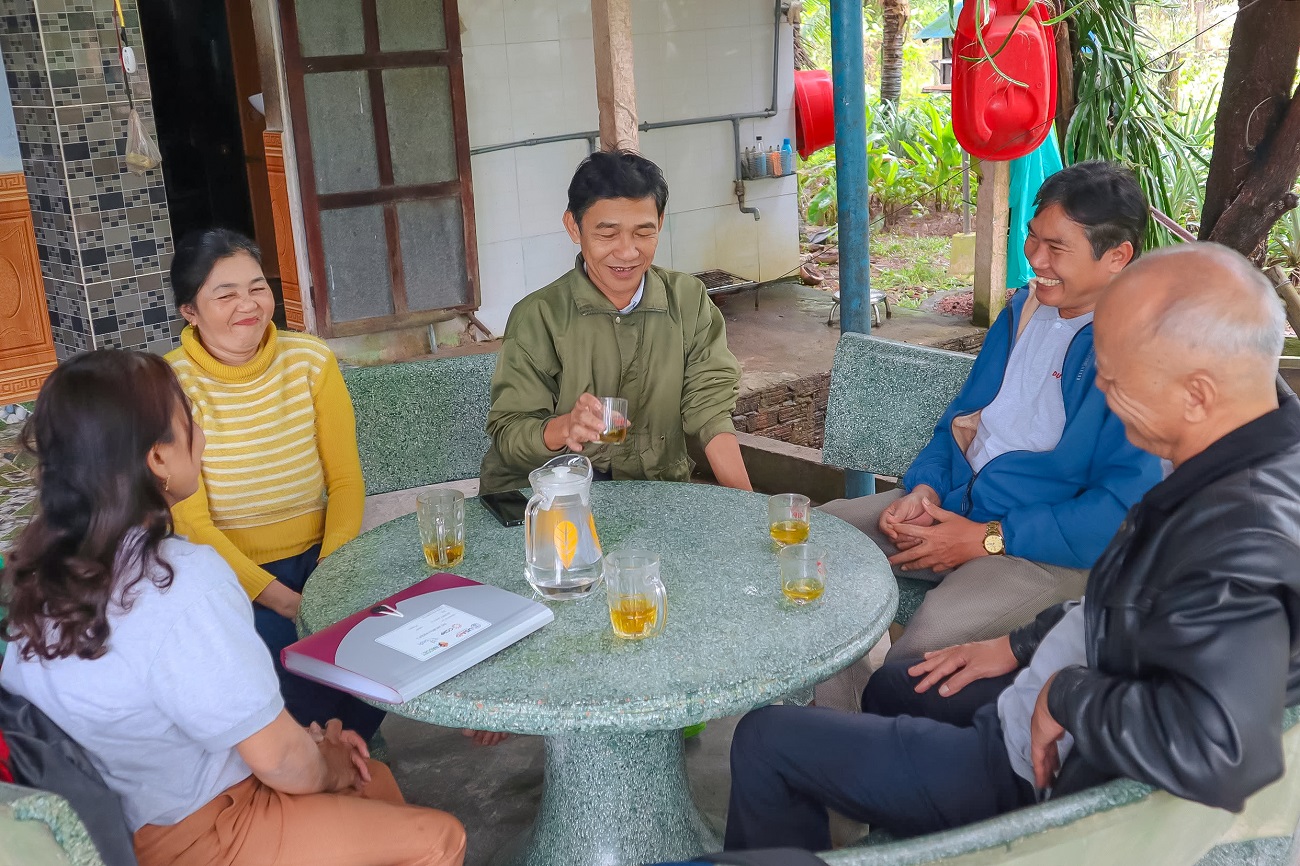
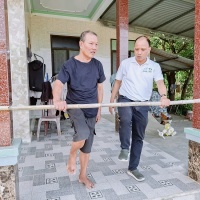
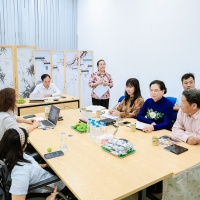
Mr. Ha Van Tien talks with a counselor and representatives of the local Disabled persons association during a home visit for independent living guidance
Mr. Tien, born in 1971, is a victim of Agent Orange exposure and has a severe physical disability, with weakness on the left side of his body since childhood. Difficulty in movement has made many daily activities slower for him than for others. Things that seem simple to many – like walking quickly to the garden or carrying a bag of feed – require much more time and effort for him.
In the past, his family raised pigs to make a living. However, after repeated disease outbreaks, even though they tried to restart several times, things did not improve. These failures gradually eroded his confidence in his ability to earn a livelihood, especially when he thought about the limitations caused by his disability. Aside from his job as a security guard, his life was seemingly closed off. After work, he would return home and rarely participate in any outside activities.
On days when his wife was away, he would eat hastily just to get through meals, often reheating prepared food instead of cooking. Although his health still allowed him to do simple exercises or rehabilitation activities, he no longer felt motivated to practice. Most of the time, he stayed at home, doing a few small tasks before quietly resting.
His wife, Ms. Nguyen Thi Lam, is also a person with a disability caused by an explosive accident, with deformities affecting her mouth, abdomen, and right leg. Due to feelings of inferiority, she has long felt insecure when communicating with others. Instead of encouraging her to join community activities, Mr. Tien often felt uncomfortable and showed frustration whenever she wanted to participate in local gatherings. As a result, their lives became increasingly isolated, confined within their small home, with limited connections to the surrounding community.
In July 2024, during a screening activity of the Inclusion 1 Project implemented by ACDC, Mr. Tien’s case was identified. Initial assessments by specialists showed that he did not require additional medical or rehabilitation interventions, as he already had a certain level of physical capacity. However, what stood out was something else – he paid little attention to himself, lacked initiative in daily life, and was becoming increasingly withdrawn from social connections.
He was then selected to participate in a home-based independent living intervention – an activity designed to help persons with disabilities gradually rebuild positive daily routines, become more proactive in their lives, and strengthen their connection with the community.
The person who directly visited and supported him was Ms. Nguyen Thi Be, a staff member of the Disabled Women's Club in Duy Xuyen district – and also a person with a physical disability herself. With empathy drawn from her own experience, Ms. Be was able to connect with Mr. Tien easily, speaking with him like a friend.
During the first visit, she came to his home, listened to his family’s story, and learned about the challenges he was facing. In the following visits, she returned to discuss in more depth how he could take care of himself, maintain daily routines, and keep up with exercise. Beyond home visits, Ms. Be also regularly called to check in, encourage him, and follow up on his progress. In those conversations, she not only shared her own experiences but also told him about other persons with disabilities who had made strong efforts to improve their lives.
It was through these simple conversations that the first changes began…
He started paying more attention to his daily meals. Instead of eating carelessly as before, he learned to prepare simple but nutritious dishes such as braised fish, soup, fried eggs, and boiled vegetables. He also maintained daily exercise and basic rehabilitation routines to improve his physical health.
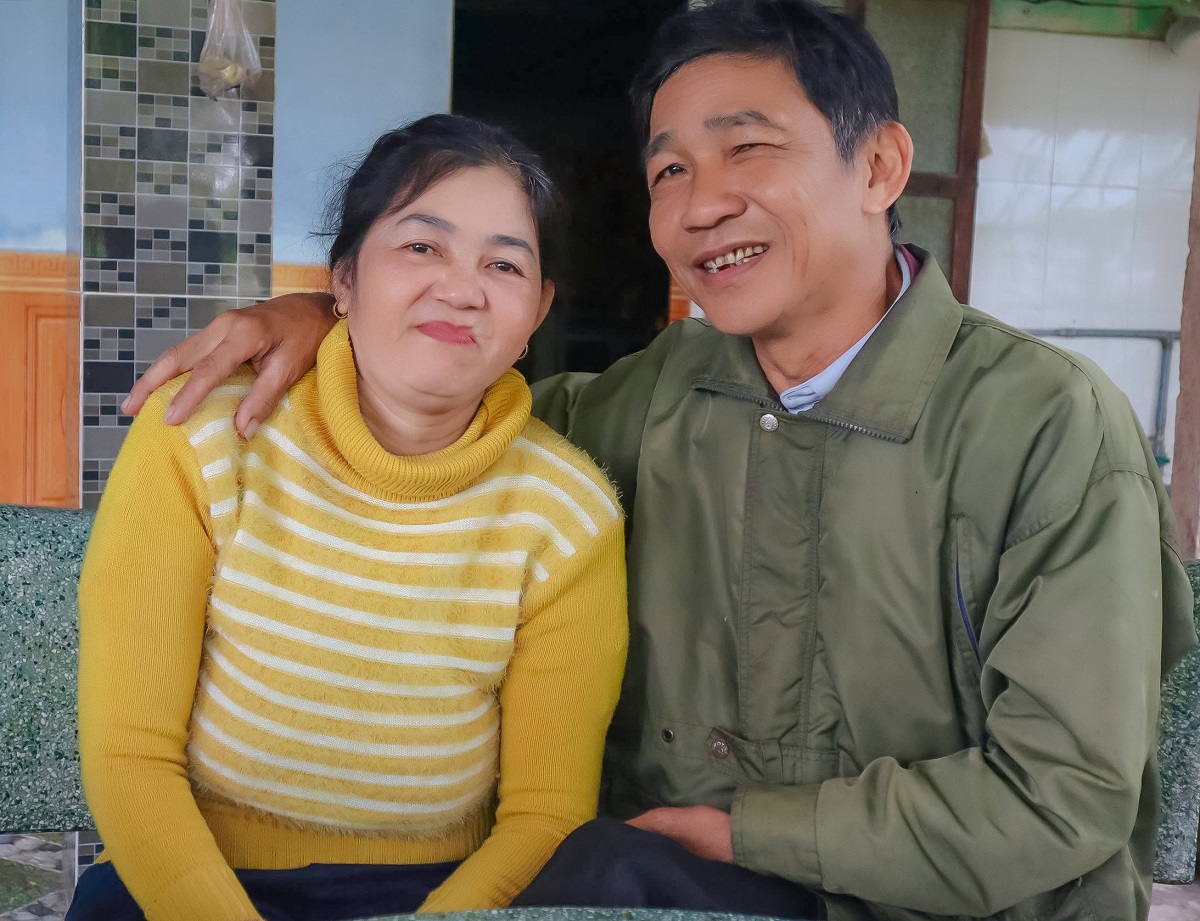
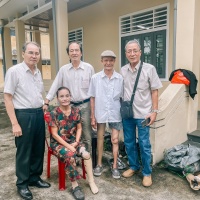
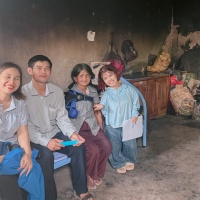
Mr. Ha Van Tien and Ms. Nguyen Thi Lam at their family home in Phu Lac village, Thu Bon commune, Da Nang city
These small changes gradually brought positive improvements. His health improved, and his mood became more relaxed. In addition to his job near home, he became more proactive in taking his grandchild to and from school and helping his wife more with household tasks. Chores that his wife used to handle alone – such as washing clothes and bedding – are now shared by him.
He also began participating in meetings, training sessions, and activities of local groups for persons with disabilities. More importantly, there was a meaningful change in his attitude toward his wife. While he used to feel uncomfortable when she wanted to join club activities, he now actively encourages and supports her to participate in the Duy Xuyen Women with Disabilities Club.
Alongside these lifestyle changes, Mr. Tien also received guidance on improving the home environment to better suit a person with a disability, such as using assistive devices and rearranging the living space to make movement easier. Later, when the family built an additional storm-resistant room next to their house, it was designed with accessible pathways, without thresholds or steps that could hinder his mobility.
As his health and mental well-being gradually stabilized, Mr. Tien began thinking about returning to income-generating activities. Recognizing his efforts and the available space for livestock, the project supported his family in developing a free-range chicken farming model with around 100 chickens.
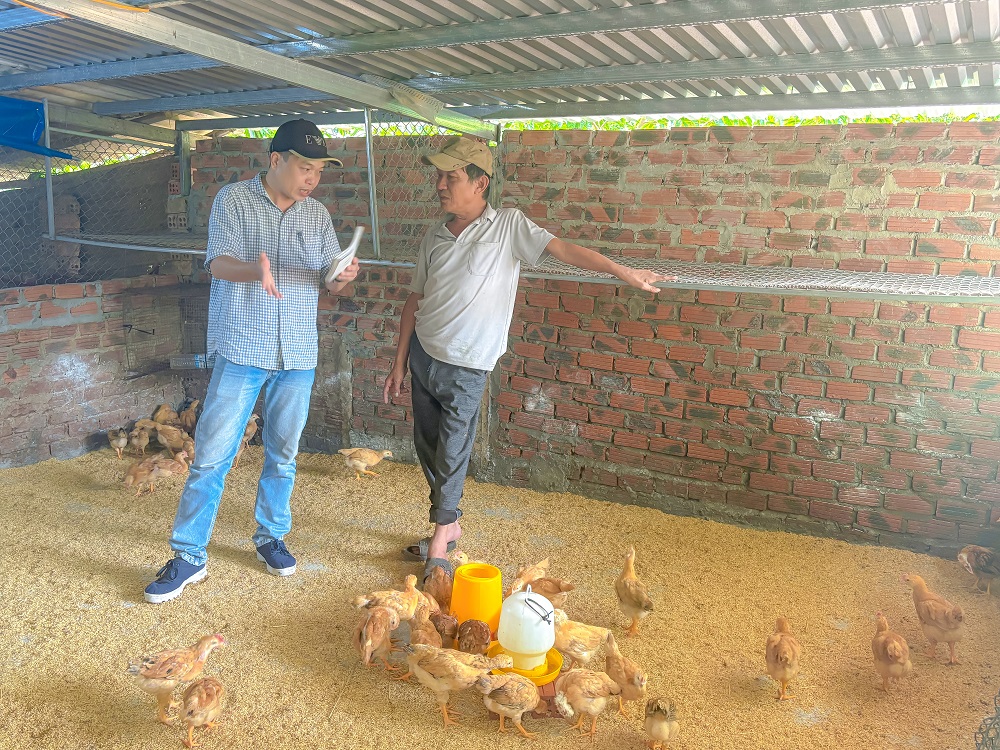
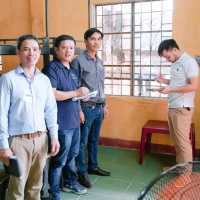
A project advisor discusses chicken care techniques with Mr. Tien at the family's chicken coop
He received technical guidance on livestock raising, financial support to improve the chicken coop, and essential equipment such as automatic feeders, drinkers, a banana chopper, as well as some feed and preventive medicine. Thanks to his diligence and perseverance, the chickens grew well. By the end of January 2026, his family had sold the entire first flock, earning more than 19 million VND. With this income, he decided to purchase two egg incubators to proactively produce chicks for the next production cycles.
Mr. Tien shared simply: “Before, I thought that being disabled meant I could not do much. But with encouragement and support, I realized that if I try little by little, I can still do it. Now, taking care of the chickens every day makes me feel more useful.”
Now, each morning as he steps into the garden behind his house and hears the lively clucking of chickens, he feels a sense of ease. But the most significant change is not just the flock itself. It is the moment he began to believe that he can take care of himself, share responsibilities with his family, and gradually take control of his own life.