

Activity
On December 7, 2021, in Hanoi, the United Nations Development Programme (UNDP) and the Mekong Development Research Institute (MDRI) held a seminar, announcing the results of the sociological survey: “Citizens' Opinions of and Experiences with Government Responses to COVID-19 Pandemic in Viet Nam: Findings from 2 nd Round Phone-Based Survey, 2021”. The event was supported and accompanied by the Department of Foreign Affairs and Trade, Australian Government (DFAT).
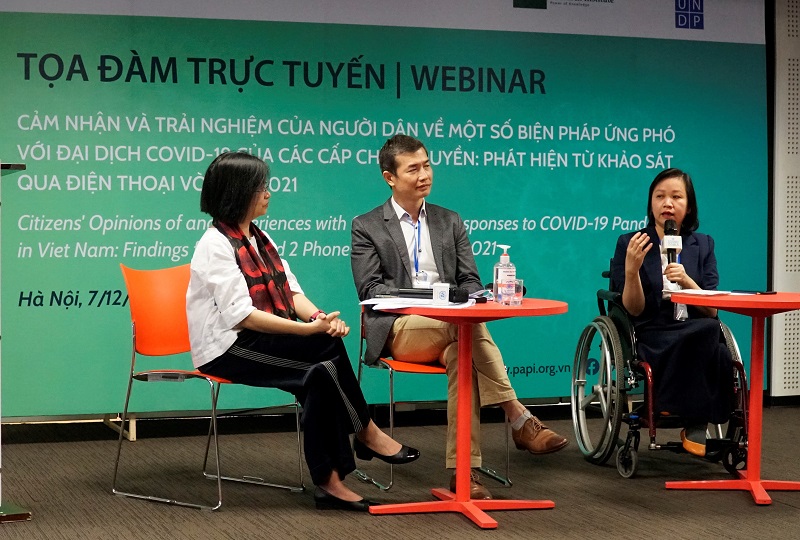
Ms. Nguyen Thi Lan Anh - Director of Action to the Community Development Institute (ACDC) speaking
Ms. Nguyen Thi Lan Anh - Director of Action to the Community Development Institute (ACDC) was one of the speakers participating in the discussion of the program's “Policy implications and suggestions on taking actions on the pandemic in the upcoming time".
The level of effect caused by the pandemic assessed in 2021 was considered to be more severe than that in 2020. 68% of respondents expressed concerns about their personal health and 76% of people were worried about the education of their children. In 2021, COVID-19 has left significant negative impact on people's employment status and income, with 77% of respondents suffering a decrease in income, especially in poor households, enthnic minority groups, non-agricultural free workers, unskilled workers, workers in service fields and people living in areas with prolonged period of social distancing.
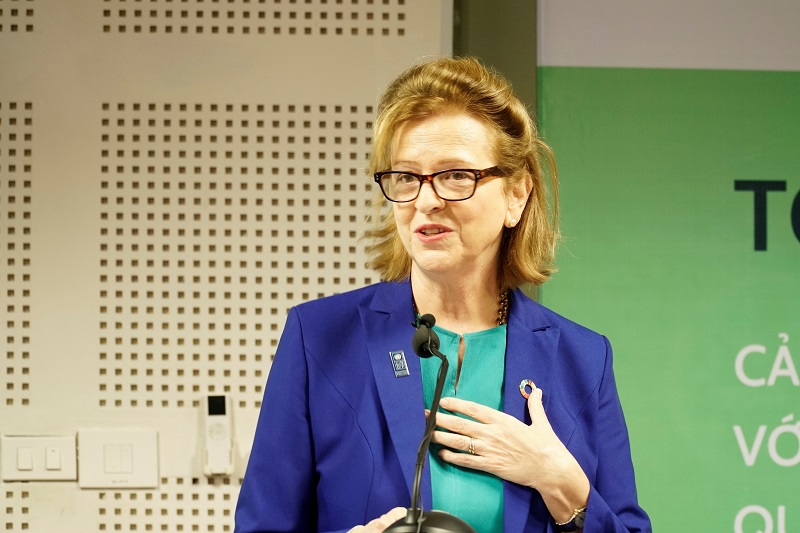
Ms. Caitlin Wiesen, Resident Representative of UNDP Vietnam reporting the situation of Covid-19 prevention and control in Vietnam
Speaking at the seminar, UNDP Vietnam’s Resident Representative Caitlin Wiesen emphasized: “The Vietnamese experience has demonstrated to the world that public trust and confidence underpin success in government responses. The year 2022 is coming with unforeseen challenges ahead of us because the pandemic is still with us and surging in many parts of the world. But with the fast and impressive delivery of COVID-19 vaccination in Vietnam in recent months, together with citizens’ support for mask mandates and the Government’s agile responses, I believe that Viet Nam is well positioned to overcome the pandemic challenges and to recover soon.”
The survey results about people's assessment on the adaptation methods of the government to the fourth COVID-19 outbreak have shown that most of the respondents still regard highly the effective level of the current responses to COVID-19 in all government levels, though the rate was lower than in 2020. 84% of respondents rated the responses of the Central Government as good or very good, 89% assessed the local authorities' responses as good or very good. People have shown strong support for most of the pandemic prevention and control measures. However, several actions such as closing farmers' markets and schools were less supported.
Regarding the accessibility and effectiveness of the Government's 26 trillion VND aid package, the survey demonstrated a low percentage of people receiving the support money. The level of accessibility to the aid package is lower for the poor than for the rich. Information about the aid package has not been distributed or disseminated widely or effectively to disadvantaged groups. Enthnic minorities, rural residents and poor people are less likely to hear about the aid package than other groups. Those who have received the support money regard the package's timeliness and accordance with the regulations highly. However, many people consider the receiving procedure to be complicated.
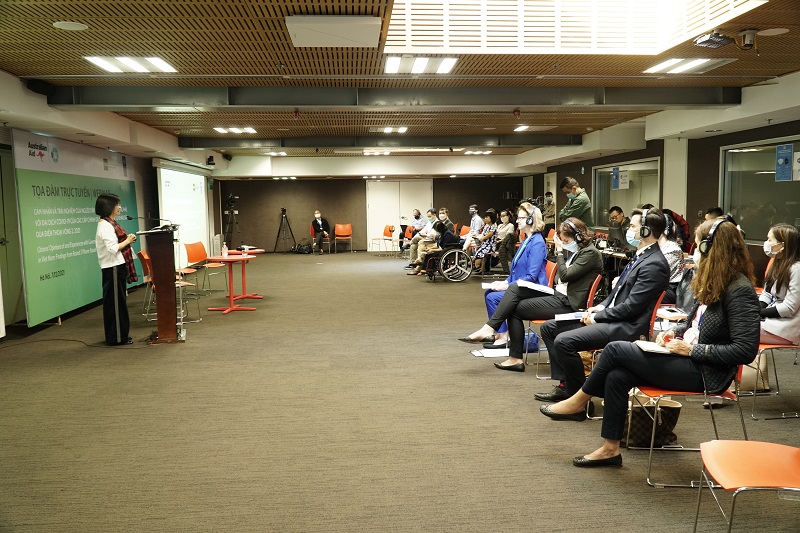
The scene of the distinguished guests attending the online seminar at UNDP
Meanwhile, online public administration services have not been put to use in the fourth outbreak. Many people had to submit COVID-19 test results in order to be admitted to hospital for medical examination and treatment. One of the existing issues pointed out by the Viet Nam Provincial Governance and Public Administration performance Index (PAPI) in the past decade was the lack of sufficiency in the performance of district-level public hospitals, which resulted in the critical status of responding to public health crisis.
The survey also reflected people's choices and expectations in responding to COVID-19. Despite the negative impacts on the economy, most people chose to prioritize health over finance. 83% of respondents agreed that “The government’s highest priority should be saving as many lives as possible, even if it means the economy will sustain more damage and recover slowly”.
Several suggestions can be drawn from the survey for the following time. Accordingly, feedback and support from citizens need to be taken into account carefully by all government levels when developing policies and adaptation methods in the coming time. Citizens' trust is the key motivation contributing to all government levels' efficiency in responding to the pandemic. Or, it is essential to focus on carrying out the aid package for the poor, unskilled workers, seasonal workers, and people working in tourism and service fields; at the same time, it’s crucial to officially recognize and take serious of the support from the community and NGOs, social organizations and charitable groups/individuals during the pandemic or similar crises. Simplifying the receiving procedure of the aid package will help people be able to receive the support money more timely.
Additionally, the online public services need to be reviewed and improved to ensure the level of user-friendliness, which would therefore encourage people to use contactless measures when working with the authorities.
.png)
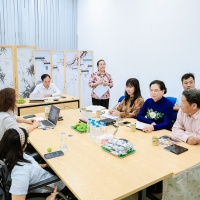
Representatives of authoritative organizations and agencies sharing issues and concerns that need to be resolved about policies during the COVID-19 pandemic
Ms. Cherie Russell, Development Counsellor, Australian Embassy Vietnam, shared: “Through these survey results, we have an important opportunity to hear the voices and experiences of Vietnam’s citizens. This evidence then informs policy decisions and builds more trust within communities for the delivery of these policies.” Using the Computer Assisted Telephone Interviews (CATI) method, this intensive telephone survey was conducted from 17 September to 15 October 2021 with the participation of 1,501 respondents randomly selected from the 2019 population sample of the Vietnam Provincial Governance and Public Administration performance Index (PAPI). The aim was to compare views and experiences of permanent residents in all 63 provinces in 2021 with those in 2020 to understand changes before and during the COVID-19 pandemic.
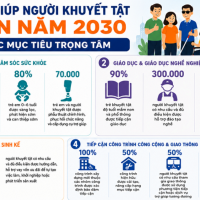
Also in the program, Ms. Nguyen Thi Lan Anh, Director of ACDC, shared part of the results of the “The Second Rapid Assessment of the Socio-Economic Impacts of Covid-19 on People with Disabilities” organized by ACDC and UNDP and expected to be announced in January 2022. In 2021, 74% of persons with disabilities said that their working hours were reduced, which was 1,5 times higher than last year (in 2020, this rate was 49%). 57% of persons with disabilities had their income reduced to less than 2 million per month, the remaining primary source of income was from social benefits and family benefits. Medical services also became more difficult to access during the pandemic, 46% of persons with disabilities shared that their monthly healthcare services were not maintained. Social security issues for persons with disabilities also faced several insufficiencies, only 20% of persons with disabilities received the aid package from the government, 33% of persons with disabilities received health protection products but from social organizations.
Commenting on the survey, Dr. Phung Duc Trung, Chairman, Mekong Development Research Institute, stated: “This is a very timely and important survey that could provide a clear picture about experience, major concerns of households during the lockdown time and the efficiency of the government interventions and policies. The survey results are the guidance for designing the better interventions and policies for the future pandemics.”
The English presentation: https://papi.org.vn/eng/thematic-research-reports/?title=chuyen-de-bao-cao-1-en The Vietnamese presentation: https://papi.org.vn/bao-cao-chuyen-de/?title=ung-pho-covid-19