

Story of Change
Hearing impairment is a form of invisible disability as it is difficult to see the difference between deaf people and others. That is the reason why the hurdles deaf people face are not properly evaluated and often neglected. The country has only two educational institutions providing high school training programs for deaf students in Hanoi and Dong Nai, and only these institutions use professional sign language interpreters in their teaching activities. Deaf students in remote areas face even more difficulties when they do not have access to sign language and teachers lack the necessary knowledge to make effective interventions for children. People in society find it difficult to communicate with deaf people, and conversely, hard of hearing people find it difficult to talk or communicate. Sometimes even their own family members are anxious they may deprive them of their rights to free movement or marriage.
Due to the inability to access education and communication, hard of hearing people lose the capability of protecting themselves against potential abuse of their rights. Deaf people may not know about their right to attend school, the right to employment, the freedom to participate in recreational and entertainment activities, or the right to self-determination. They absolutely have no ideas about such rights and do not understand how these rights will benefit their lives. Deaf people often only communicate with one another, and can become isolated from their community.
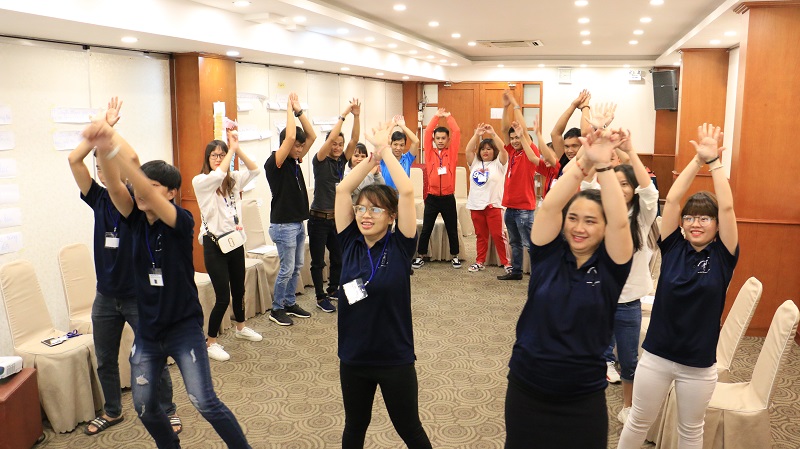
Realizing this reality, ACDC has made great efforts to bring information on rights and legal policies closer to the deaf community. Every time the image of a sign language interpreter appears, the public knows there is the presence of hard of hearing or deaf people. Deaf people from the North, the Central, and the South participate enthusiastically and eagerly in TOT courses, and share humorous stories in a very particular way. “At first, I did not understand what activities I was participating in, only knew that there would be sign language interpreters so we would understand and learn new things”, Pham Anh Duy, a teacher teaching deaf and mute children at Nhan Chinh school, shared his experience when he first attended the training course on the UNCPRD. In his view, the opportunities to access information conveniently are few but valuable. Particularly, these chances help deaf people realize their position in the society and reinforce the belief in their ability to succeed. “I learnt many things and understood my rights more clearly. Such information is so helpful that I feel I need to learn more to improve my ability, feel more confident and become more knowledgeable”, he expressed.
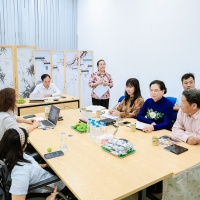
After completing the training courses, deaf teachers actively organize training sessions for members of deaf clubs across the country. They design the training contents, contact students and implement programs with technical assistance from ACDC. The teaching focuses on introducing important rights and giving examples to clarify concepts that were previously unknown to the deaf. “I try to use a variety of visual methods which suit the way deaf people acquire information to stir excitement among students. Every time a student boldly stands up and confidently makes the speech, I feel extremely happy”, Thanh Huong, a member of Ho Chi Minh City deaf club, talked about her feelings of teaching directly to people in the same circumstance. Only when deaf people understand their rights and are equipped with necessary skills, and have timely and effective support from social organizations will they have the opportunity to raise their voice to protect themselves and other vulnerable members of the community, and thus, no one will be left behind.