

Activity
In June 2026, the Action to the Community Development Institute (ACDC), in collaboration with the Quang Tri Provincial Department of Health, organized the activity “Home-based Rehabilitation Intervention (First Round) and Assessment of Needs and Prescription of Assistive Products for Persons with Disabilities.” The activity was conducted in two phases, from 12–16 June and 19–23 June 2026, across 13 communes and wards in Quang Tri Province.
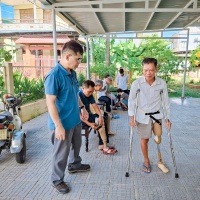
During the implementation period, rehabilitation technicians and healthcare staff directly visited households to provide home-based rehabilitation interventions for 95 persons with disabilities, while assessing needs and prescribing assistive products for 92 individuals who required support.
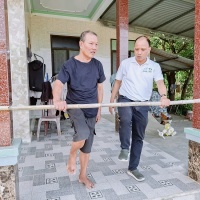
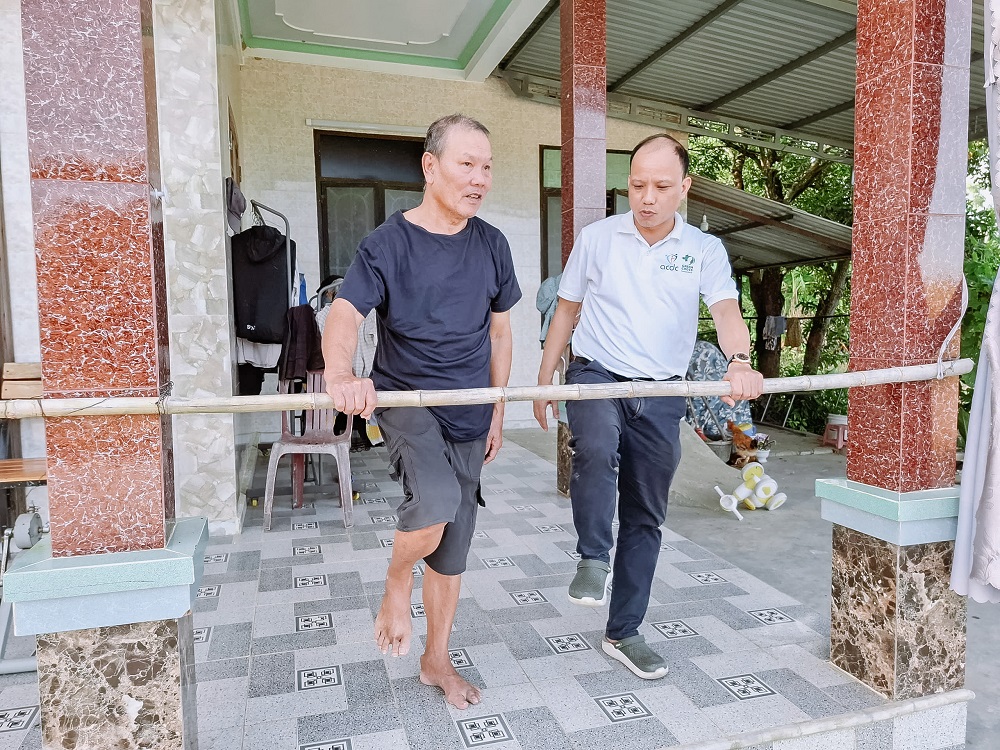
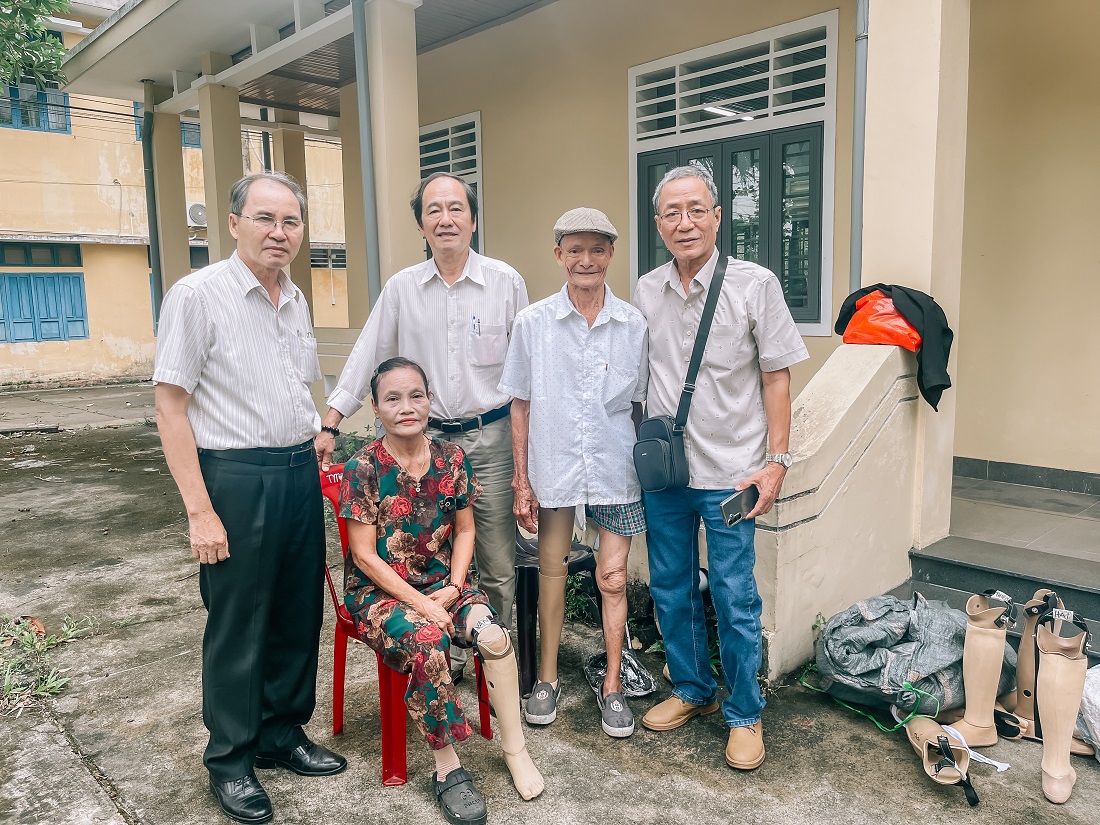
The interventions were carried out in accordance with professional procedures, including functional assessments, guidance on appropriate rehabilitation exercises, and instruction for persons with disabilities and their caregivers on maintaining daily exercises at home to improve rehabilitation outcomes. At the same time, technicians assessed assistive product needs based on each individual’s functional condition, housing situation, and living environment in order to prescribe suitable assistive products that would support safer and more independent mobility and daily living activities.
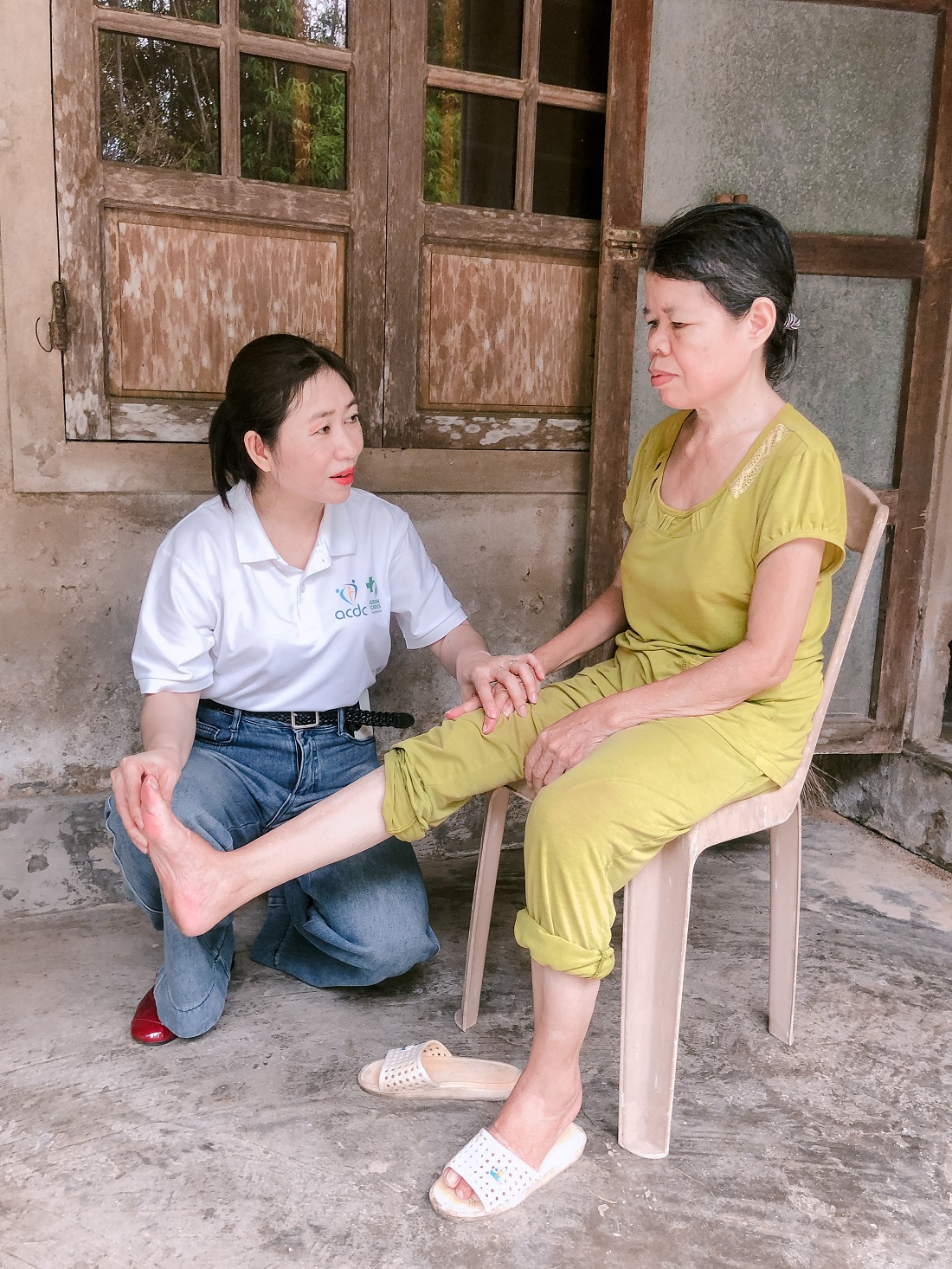
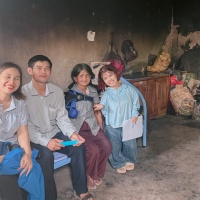
Healthcare staff guide home-based rehabilitation exercises for persons with disabilities
The provision of professional support at home has brought reassurance and motivation to many persons with disabilities and their families throughout the rehabilitation process.
Ms. D.T.D. from Ai Tu Commune shared: “Because travelling is very difficult for me, I previously had few opportunities to participate in rehabilitation exercises and often did not know which exercises were suitable for my condition. Now, the project’s rehabilitation technicians have come directly to my home, examined my condition, and carefully guided me through exercises tailored to my needs. I feel very happy and reassured. I now have a personalized exercise plan to follow every day, and I will do my best to maintain the practice in the hope of improving my health, moving around more easily, and becoming more independent in my daily activities. My family and I are very grateful to the project and all the staff for their support and care.”
Ms. T.N.T., mother of T.K.N. from Gio Linh Commune, said: “I have always wanted to help my child practice rehabilitation exercises but did not know where to start, and I worried that doing the exercises incorrectly might affect my child’s health. Now that the project’s healthcare staff have come directly to our home to demonstrate each exercise and clearly explain my child’s condition, I feel much more confident and reassured. In addition, they assessed and recommended assistive products and training equipment to support my child’s rehabilitation at home. My family is deeply moved and grateful for the project’s support. This encouragement means a great deal to us and motivates us to continue accompanying our child on this journey.”
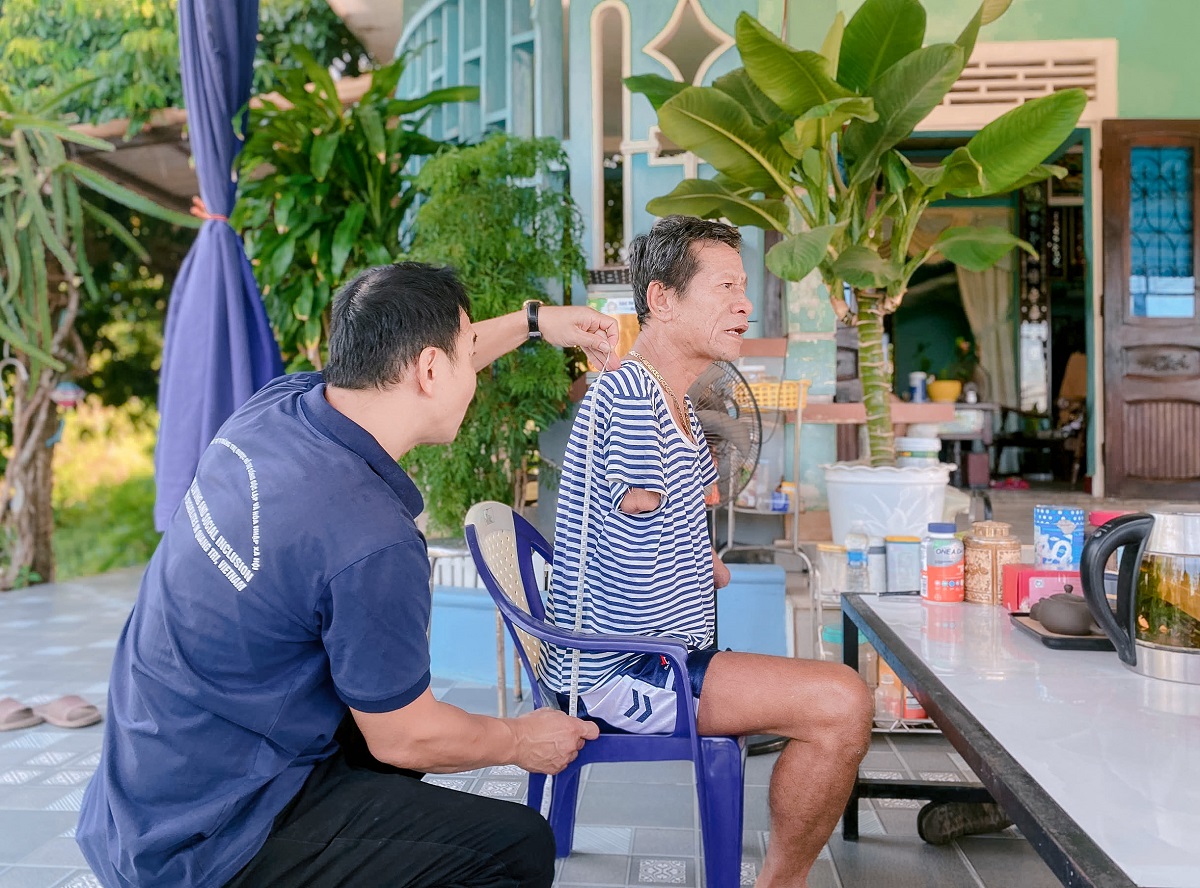
A technician assesses the sitting posture and appropriate assistive device needs of a person with disability
Mr. T.V.T., father of T.T.T. from Gio Linh Commune, expressed: “My daughter’s wheelchair has been damaged for a long time, so our family has had to borrow one from a neighbor in the village. However, that wheelchair is too high and does not fit her physical condition, making sitting and moving around very inconvenient. We are very pleased and reassured that the project’s technicians came to our home to assess her needs, take measurements, and prescribe a wheelchair that is appropriate for her condition. We hope that with a new wheelchair, she will be able to move around more easily and carry out daily activities more safely and independently.”
In the coming period, the project will continue implementing three additional rounds of home-based rehabilitation interventions to support persons with disabilities in maintaining the exercise plans developed for them. The project will also organize the distribution of prescribed assistive products and provide guidance on their proper use.
This activity is part of the Project “Independent Living and Social Inclusion for Persons with Disabilities in Quang Tri, Vietnam” and the Project “Enhancing Livelihood and Well-being of Persons with Disabilities in Quang Tri Province, Vietnam, Phase in 2026,” implemented by ACDC with funding support from Green Cross Switzerland.
Translator Nguyen Dac Thanh